
The Toyota Alphard is the car that made the UK aware JDM MPVs exist. It is also the one most likely to confuse a first-time buyer, because four generations span twenty years of production, and the trim level hierarchy within each generation is deep enough that two Alphards at the same price point can be fundamentally different vehicles.
This guide covers every generation from the original AH10 to the current AH40, with a focus on what is actually importable, what each trim level delivers, and which specific year-and-spec combination represents the best value in 2026. I do not own an Alphard (my MPV is a Noah), so this is research rather than ownership experience.
Generation overview
| Generation | Chassis code | Production | Engines | Key changes | 2026 UK price range |
|---|---|---|---|---|---|
| AH10 (1st gen) | ANH10 / MNH10 | 2002-2008 | 2.4 2AZ-FE, 3.0 1MZ-FE | Launched the nameplate; established the premium captain-chair MPV format above the Estima | £4,000-7,000 |
| AH20 (2nd gen) | ANH20 / GGH20 / ATH20 | 2008-2015 | 2.4 2AZ-FE, 3.5 2GR-FE, 2.4 hybrid | Hybrid option added; major interior quality jump; facelift in 2011 | £8,000-16,000 |
| AH30 (3rd gen) | AGH30 / GGH30 / AYH30 | 2015-2023 | 2.5 2AR-FE, 3.5 2GR-FKS, 2.5 hybrid | Executive Lounge trim; significant refinement leap; hybrid became the volume seller | £18,000-45,000 |
| AH40 (4th gen) | AAHH40 / AAHH45 (hybrid); AGH40 / AGH45 (petrol); AAHP45 (PHEV) | 2023-present | 2.5 hybrid (A25A-FXS + e-motors); 2.5 petrol (2AR-FE); 2.5 PHEV from January 2025 | Hybrid-dominant; TNGA-K platform; PHEV added January 2025 | £45,000-70,000+ |
AH10: the original (2002-2008)
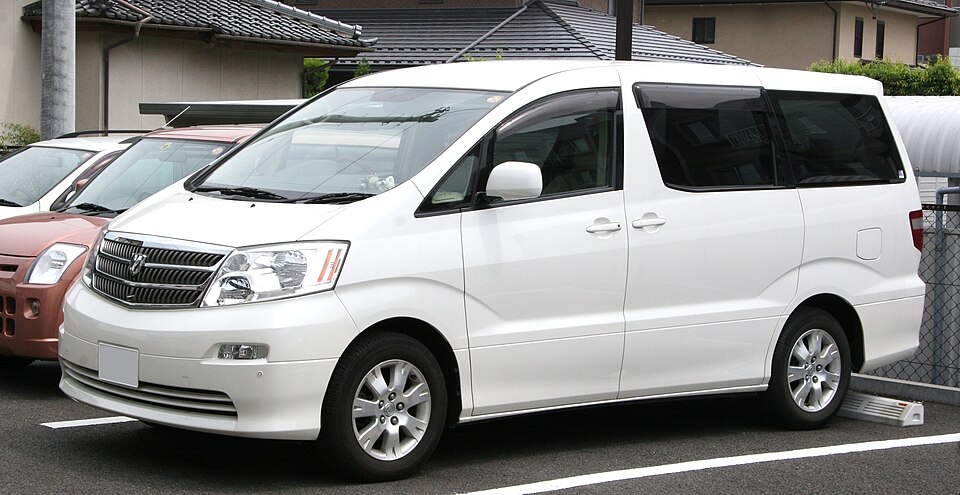
The AH10 was Toyota’s first attempt at a premium large MPV for the Japanese domestic market, and it landed well enough to create the category. Prior to the Alphard, Toyota’s MPV lineup topped out at the Estima (a competent but mid-range people carrier). The Alphard sat above it: bigger, quieter, with the electrically adjustable captain’s chairs in the second row that would become the nameplate’s defining feature.
Engines and gearboxes
The 2.4-litre 2AZ-FE (159bhp) paired with a four-speed automatic is the most common AH10. It is adequate for the car’s weight but not generous; motorway overtaking requires planning. The 3.0-litre 1MZ-FE V6 (220bhp) is smoother and more capable, but fuel economy drops to around 18-22mpg real-world. Both use a conventional torque converter automatic; no CVT on this generation. A low-volume hybrid variant, the ATH10W, did exist from July 2003 (2.4-litre 2AZ-FXE; Toyota’s second hybrid minivan after the Estima Hybrid), but the AH10 hybrid was rare even in Japan and is almost unheard-of as a UK import. Skip it.
Trim levels worth knowing
- G and V: The two main grades. The V is the higher specification with leather, wood trim, and the powered captain’s chairs. The G has cloth seats on base variants.
- MZ G Edition: A special order variant with additional interior features. Uncommon in imports.
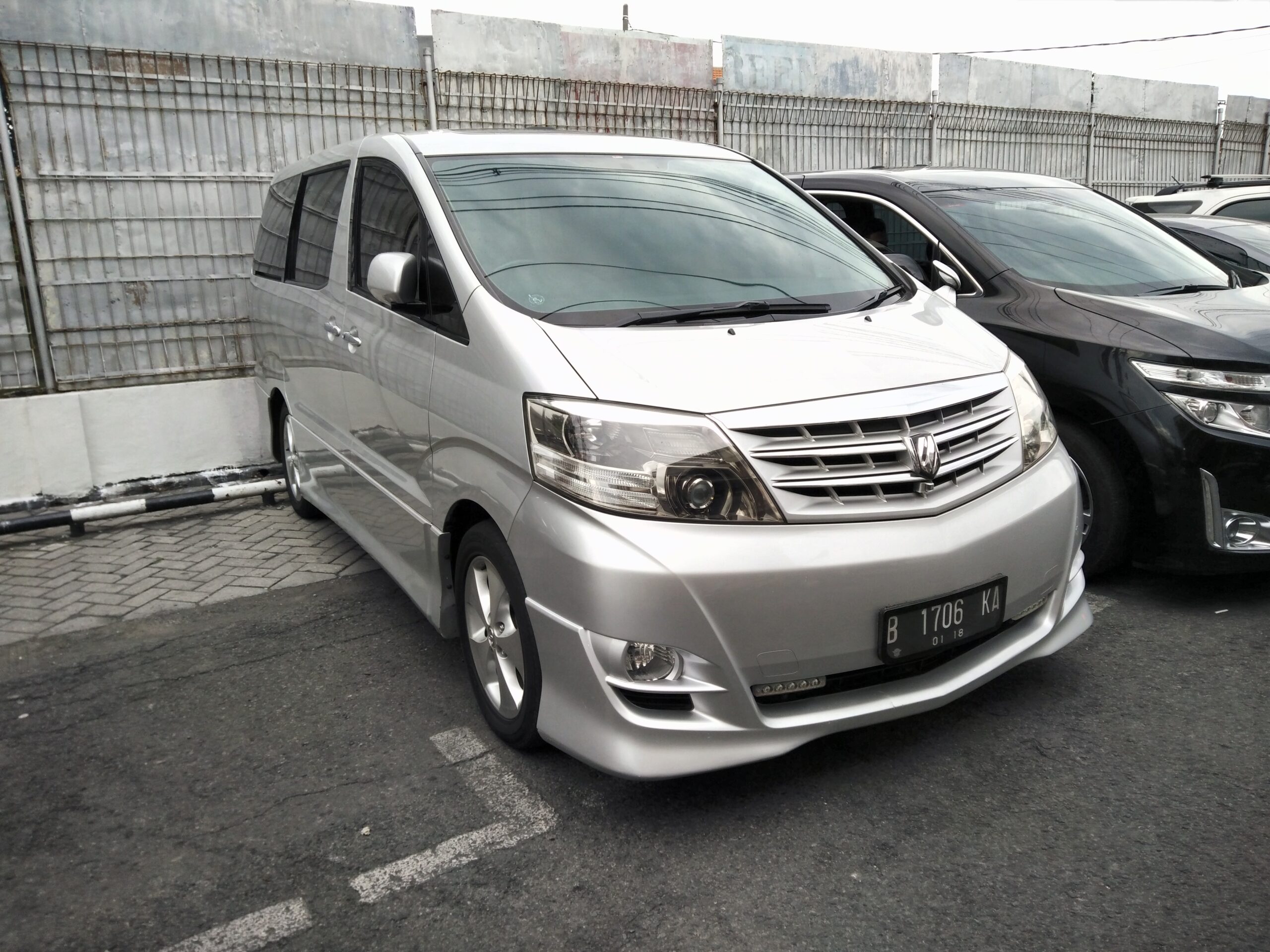
- AS: A sportier-styled variant with a different grille and suspension tune. Drives slightly better than the standard car.
Common faults
- The 2AZ-FE has a documented oil consumption issue on earlier production cars, caused by piston ring design. Toyota issued a service campaign in Japan. Ask specifically about oil consumption on any AH10 inspection.
- Power sliding door motors fail over time. Replacement is £400-600 per side.
- The four-speed automatic is robust but not particularly efficient; budget for slightly higher fuel costs than the later CVT-equipped generations.
UK importability
- All AH10s are over 10 years old; IVA not required.
- ULEZ compliance is borderline: the 2AZ-FE and 1MZ-FE meet Euro 3 in most configurations. Check the specific car with the DVLA vehicle enquiry service.
- Insurance: a personal import this old goes on a specialist-import policy rather than the standard ABI/Thatcham group system. Premiums broadly track a Group 15-20 mainstream MPV.
Verdict
The AH10 is the budget entry point. It established the formula but the interior quality, refinement, and engine options are noticeably behind the AH20. Buy one if budget is the primary constraint and you want the Alphard experience at the lowest possible entry price.
- Best buy: 2005-2008 AH10 V-spec 3.0 V6, £5,000-7,000 delivered
AH20: the sweet spot (2008-2015)
The AH20 is the generation most commonly imported to the UK in 2026, and for good reason. Toyota addressed nearly every shortcoming of the AH10: the interior quality jumped significantly, the hybrid powertrain (carried over in principle from the rare AH10 ATH10W) moved onto Toyota’s THS-II system with E-Four electric AWD, the 3.5-litre V6 replaced the old 3.0, and the ride and refinement improved across the board.
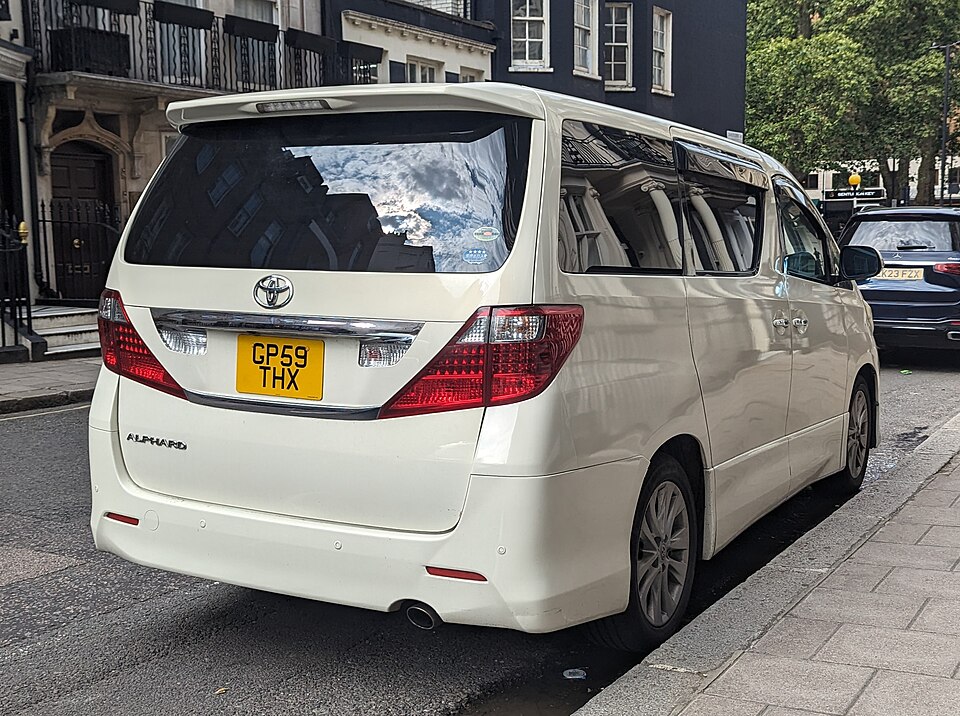
The 2011 facelift brought a revised front end, updated infotainment, and minor interior improvements. Facelift cars carry a £1,000-2,000 premium over pre-facelift examples and are generally worth the difference.
Engines and gearboxes
- 2.4 2AZ-FE (170bhp): The volume engine. Paired with a CVT on the AH20, which improves fuel economy to approximately 28-32mpg real-world. The same oil consumption concern from the AH10 applies, though later production runs addressed the worst of it.
- 3.5 2GR-FE (280bhp): The performance option. Significantly more power than most Alphard buyers need, but smooth and refined. Fuel economy drops to 20-24mpg. Paired with a six-speed automatic (not CVT), which many owners prefer for refinement.
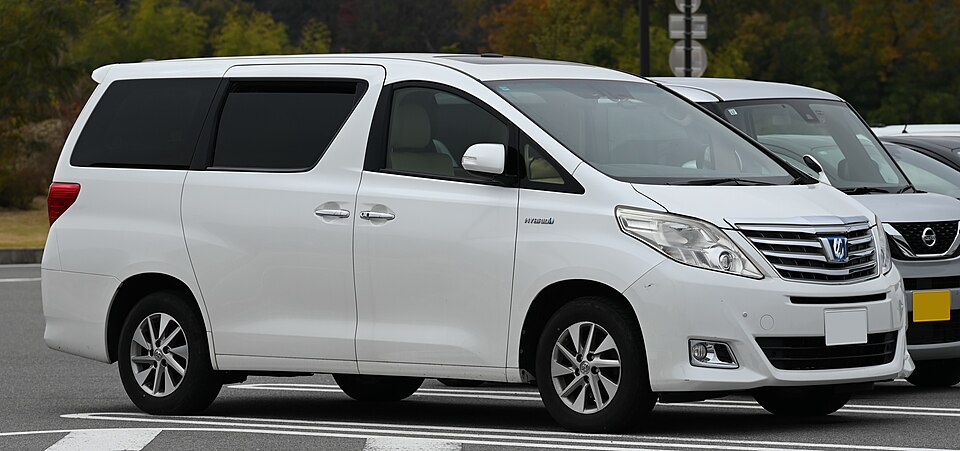
- 2.4 hybrid (around 190 PS / 187 bhp combined): The 2AZ-FXE Atkinson-cycle engine (150 PS / 148 bhp on its own) paired with a front motor and a rear motor for E-Four electric AWD. Real-world economy of 35-42mpg is achievable. The hybrid battery sits under the front seats, which slightly reduces second-row legroom on some trim levels.
Trim levels worth knowing
- X: Base trim. Cloth seats, fewer electrical features. Adequate but sparse.
- G: Mid-range. Captain’s chairs in the second row, improved infotainment, additional safety kit.
- GF (3.5 V6 only): High specification with leather, powered captain’s chairs, and the full suite of electrical conveniences.
- Hybrid G / Hybrid SR: The hybrid variants in mid and sport-tuned trim.
Common faults
- CVT reliability is generally good on the AH20 but fluid changes at 40,000km intervals are non-negotiable. Neglected CVT fluid is the number one preventable failure on imported Alphards.
- Power sliding door motors (same issue as AH10; budget for eventual replacement).
- The infotainment system is Japanese-language only. Budget for a replacement head unit or an Apple CarPlay adapter module.
- Hybrid battery degradation on higher-mileage examples. Insist on a battery health report.
UK importability
- Pre-2016 examples are over 10 years old and exempt from IVA. Newer examples (2016 onwards) require IVA (£199 test fee plus £200-400 for preparation).
- ULEZ: All AH20 petrol and hybrid models are Euro 4 or above. Compliant in London ULEZ and all current UK Clean Air Zones.
- Insurance: specialist-import policy required; quotes broadly in line with a Group 20-28 mainstream equivalent.
Verdict
The AH20 is the Alphard that most UK buyers should be looking at in 2026. The price-to-quality ratio is the strongest of any generation: you get a genuinely premium seven-seater with hybrid economy for less than a new Ford Galaxy. The 2011+ facelift hybrid in G trim is the specific car to target.
- Best buy: 2012-2015 AH20 Hybrid G facelift, £12,000-16,000 delivered
AH30: the premium leap (2015-2023)
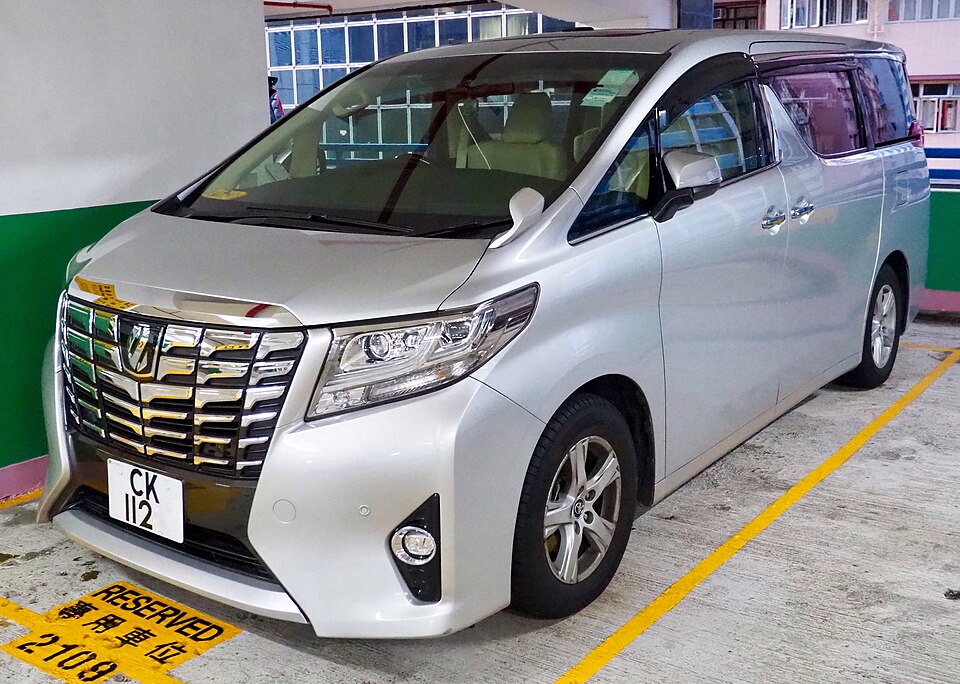
The AH30 is where the Alphard moved from ‘large MPV’ to ‘luxury transport’. The Executive Lounge trim, in particular, is a car that makes first-class airline seating look competitive rather than aspirational. The interior quality, NVH (noise, vibration, harshness), and ride refinement are a genuine generation ahead of the AH20.
This is also the generation that attracted mainstream UK press attention, largely because Premier League footballers and their families started appearing in them. Prices reflect that visibility.
Engines and gearboxes
- 2.5 2AR-FE (182bhp): The new base petrol, replacing the 2.4. Paired with a CVT. Adequate, quiet, economical enough at 28-32mpg.
- 3.5 V6 (276-301bhp depending on year): Pre-facelift cars (2015-2017) carry the older 2GR-FE (280 PS) with a six-speed automatic, carried over from the AH20. The 2018 facelift introduced the 2GR-FKS with direct injection and VVT-iW (301 PS JDM rating) paired with Toyota’s Direct Shift-8AT eight-speed. Rapid for a vehicle this size; 22-26mpg real-world.
- 2.5 hybrid (197bhp combined): The volume seller by a wide margin. Uses the 2AR-FXE (a 2.5-litre Atkinson-cycle four shared with the Camry Hybrid) paired with front and rear electric motors. Real-world economy of 38-48mpg. E-Four (electric rear axle AWD) available.
Trim levels worth knowing
- X: Base. Still well-equipped by European standards, but cloth seats and fewer electrical features.
- S / S C Package: Mid-range with sportier styling. Seven or eight-seat configurations.
- G / G F Package: Higher specification with leather, powered everything, and improved sound deadening.
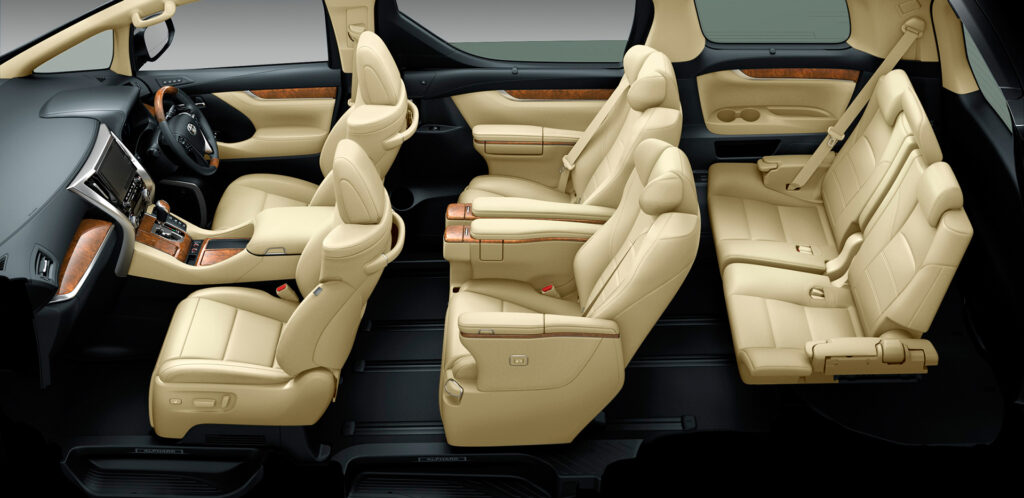
- Executive Lounge: The flagship. Individual powered rear seats with extending leg rests, reading lights, personal climate zones, and a level of second-row passenger comfort that genuinely has no European equivalent at any price. This is the trim that commands £35,000-45,000 in 2026.
- SC / GF: Sport and luxury variants of the mid and high trims respectively.
Common faults
- The AH30 is a newer and generally more reliable generation. The primary concerns are:
- Hybrid battery health on higher-mileage examples (same inspection procedure as AH20).
- The eight-speed automatic on the V6 is more complex than the CVT; verify service intervals have been met.
- Infotainment remains Japanese-language; the later AH30 models have larger screens that are more expensive to replace.
UK importability
- AH30s first registered in 2016 or later require IVA (£199 test fee plus £200-600 for preparation). Earlier 2015 examples are over 10 years old and exempt.
- ULEZ: All AH30 variants are compliant.
- Insurance: specialist-import policy; Executive Lounge trims price closer to a Group 35-40 mainstream equivalent.
Verdict
The AH30 is the Alphard for buyers who want the full luxury experience and have the budget to match. The Executive Lounge is a remarkable vehicle; the standard G hybrid is the rational choice if the Executive Lounge premium does not make sense.
- Best buy (value): 2017-2019 AH30 Hybrid G, £22,000-28,000 delivered
- Best buy (luxury): 2020-2023 AH30 Hybrid Executive Lounge, £35,000-45,000 delivered
AH40: the current generation (2023-present)
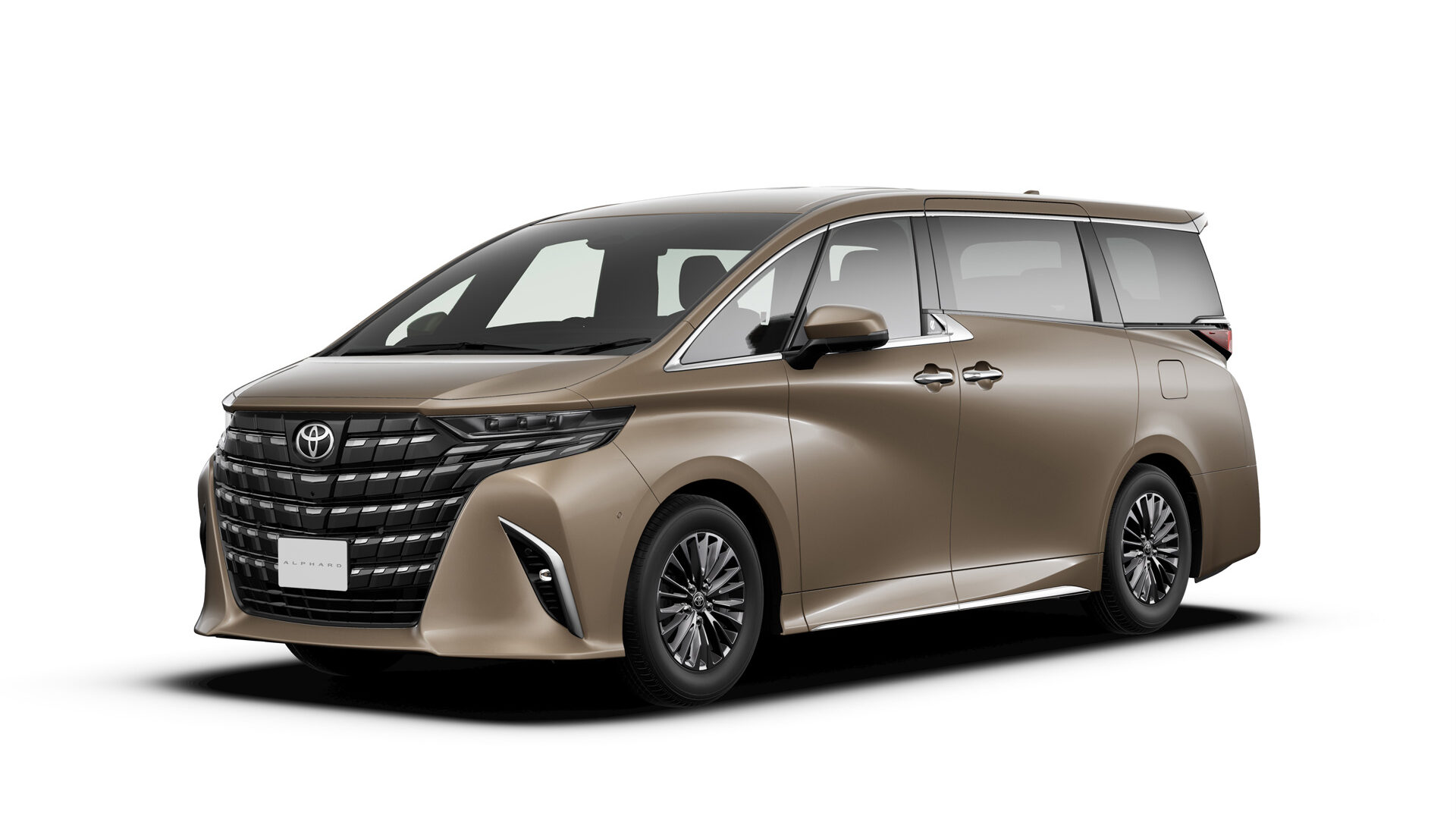
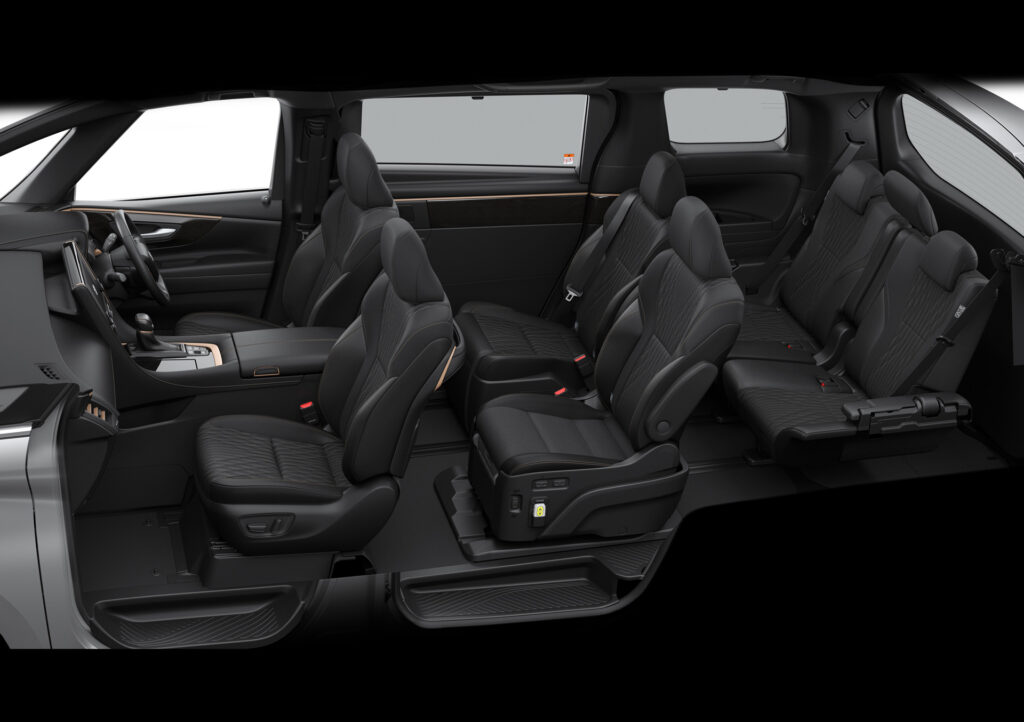
The AH40 moved the Alphard onto Toyota’s TNGA-K platform, made hybrid the volume powertrain (a 2.5 2AR-FE petrol remains in the JDM range, and Toyota added a PHEV variant in January 2025), and introduced a more angular exterior design that divides opinion. The interior quality is the highest of any Alphard generation. The hybrid system is the latest Toyota iteration, returning genuine 45-55mpg in mixed driving.
For UK importers, the AH40 is not yet a practical proposition for most buyers. Prices in Japan remain high (the car is still in current production), and IVA compliance on a nearly-new vehicle adds cost and complexity. The AH40 will become the mainstream import choice in approximately 2028-2030, once supply normalises and early depreciation has worked through.
The short version
If you want an AH40 in the UK in 2026, expect to pay £45,000-70,000+ depending on specification. That money buys an extraordinary vehicle. It also buys a lot of AH30 Executive Lounge, which is 90% of the experience at 60% of the cost. Unless you specifically want the current-generation design language or the latest hybrid system, the AH30 remains the better value proposition.
- Best buy: Wait. The AH30 is the rational choice in 2026.
Which generation to actually buy in 2026
The answer depends entirely on budget:
- Under £8,000: AH10 V-spec 3.0 V6, 2005-2008. The cheapest Alphard experience. Accept the older interior and the fuel economy.
- £8,000-16,000: AH20 Hybrid G facelift, 2012-2015. The sweet spot for most families. This is the car I would recommend to anyone asking ‘which Alphard should I buy?’ without further context.
- £18,000-30,000: AH30 Hybrid G, 2017-2019. A significant step up in refinement and interior quality.
- £30,000-45,000: AH30 Hybrid Executive Lounge, 2020-2023. The full experience.
- £45,000+: AH40. Only if the latest generation specifically appeals and the budget is comfortable.
How to buy an Alphard in the UK
The process is the same as any JDM import: work with a BIMTA-registered specialist importer, agree a brief in writing (generation, trim, mileage cap, target auction grade, all-in budget), and allow twelve to twenty weeks from brief to driveway (auction win to UK arrival alone is typically ten to sixteen weeks). The Alphard is one of the most commonly imported JDM vehicles in the UK, which means importer experience is generally good and parts availability is reasonable.
For the AH20 hybrid specifically, insist on a hybrid battery health report before purchase. For any generation, check the CVT or automatic transmission fluid service history; a skipped fluid change is the most common preventable problem on imported Alphards.