
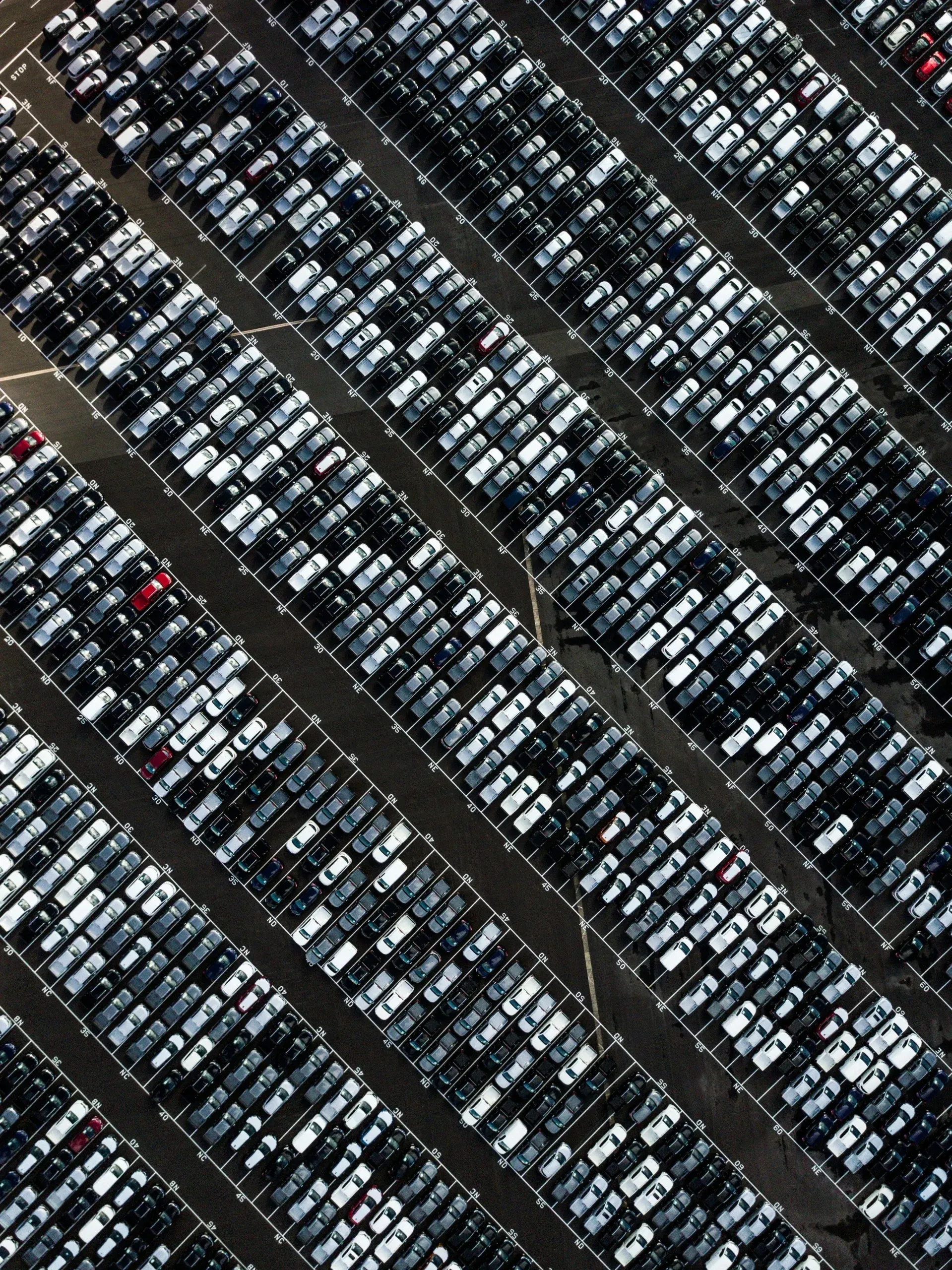
Every car that passes through a Japanese auction house receives a grade. The grade is an independent assessment of the car’s condition, carried out by the auction house’s inspector before the sale. It is the single most important piece of information on the auction sheet, and it is the value your importer uses to filter the hundreds of thousands of cars that pass through Japanese auctions every week.
The grading system is not fully standardised across all auction houses. USS, TAA, HAA, JU, CAA, Bayauc, and the smaller regional houses each have slight variations in how they apply grades and what additional codes they use. The core numeric scale (S through 1) is consistent enough to be useful across all of them, but the special codes (R, RA, A, *, and others) vary more. This article covers every grade and code you are likely to encounter, notes where auction houses differ, and explains which grades UK buyers should target.
The core numeric scale
This is the backbone of the system. Every major auction house uses it.
S grade
As close to new as a used car gets.
An S-grade car is typically under 12 months old with fewer than 10,000km on the odometer. No scratches, no dents, no interior wear. The car looks, smells, and drives like it just left the dealership.
- UK buyer relevance: Rare in the import market because S-grade cars are expensive and the savings over buying new are marginal after shipping, duty, and VAT. Occasionally relevant for models not sold new in the UK (Alphard, Noah, etc.).
- Typical price premium: 15-25% above grade 4.5 for the same model.
Grade 6
Excellent condition, very low mileage.
Grade 6 cars are typically up to three years old with under 30,000km. Minimal wear, no meaningful cosmetic defects, full service history. The car is in demonstrably better condition than the average used car.
- UK buyer relevance: The sweet spot for buyers who want a near-new car at a meaningful discount to new. Grade 6 Alphards and Noahs are common and represent good value.
- Typical price premium: 10-15% above grade 4.5.
Grade 5
Very good condition, low to moderate mileage.
Grade 5 cars are clean, well-maintained, and have only minor cosmetic imperfections (a small scratch, a minor interior mark). Mileage is typically under 60,000km. Service history is usually complete or near-complete.
- UK buyer relevance: Excellent value. The cosmetic imperfections are typically invisible at arm’s length. Grade 5 is the grade most UK importers recommend as the starting point for buyers who want quality without paying a premium for perfection.
- Typical price premium: 5-10% above grade 4.5.
Grade 4.5
Good condition, moderate mileage.
Grade 4.5 is the benchmark. A car at this grade is in good overall condition with some visible wear: light scratches on the bodywork, minor scuffs on the interior trim, and moderate mileage (typically 50,000-100,000km). Nothing that affects the car’s function or safety, but the car is visibly used.
- UK buyer relevance: The most commonly imported grade for value-conscious buyers. A grade 4.5 car delivers 90% of the condition of a grade 5 at a meaningful saving. Most of the cosmetic imperfections can be corrected with a machine polish and an interior detail.
- Typical price: The baseline against which all other grades are compared.
Grade 4
Decent condition, higher mileage, or more cosmetic wear.
Grade 4 cars have more visible wear: multiple scratches, some dents, and interior stains or scuffs. There is no strict mileage rule, though above roughly 150,000km a car usually cannot qualify as grade 4; condition is the primary factor. The car is mechanically sound and structurally good, but it looks its age.
- UK buyer relevance: Good value for buyers who plan to use the car hard (daily driving, dog car, family workhorse) and do not mind cosmetic imperfections. Not ideal for buyers who want a car they are proud to park.
- Typical price discount: 10-20% below grade 4.5.
Grade 3.5
Below average condition.
Grade 3.5 cars have significant cosmetic wear: larger scratches, multiple dents, faded or mismatched paint, and an interior showing heavy use. Mileage varies; some grade 3.5 cars are low-mileage but cosmetically poor (hail damage, parking dents in tight Japanese car parks). Mechanically, the car should still be functional, but the grade indicates that something is noticeably below the market average.
- UK buyer relevance: Only for buyers who are comfortable with visible imperfections or plan to repair and refurbish. An experienced importer will tell you whether a specific grade 3.5 car’s issues are cosmetic (fixable at reasonable cost) or deeper (worrying).
- Typical price discount: 20-35% below grade 4.5.
Grade 3
Rough overall condition.
Grade 3 indicates a car with extensive cosmetic issues and potentially minor mechanical faults: worn tyres, noisy brakes, paint peeling, multiple dents, and a tired interior. This is a high-mileage car that has been used hard and maintained to the minimum.
- UK buyer relevance: Only for budget buyers or project cars. Expect to spend £500-1,200+ on reconditioning (paint correction, interior refresh, mechanical servicing). A grade 3 car from a reputable auction house is still structurally sound; the grade reflects cosmetic and wear issues, not structural failure.
- Typical price discount: 30-45% below grade 4.5.
Grade 2 and 2.5
Serious panel damage, extensive rust, or water damage.
Grade 2 and 2.5 cars have major issues. This grade is commonly assigned to cars with severe rust or corrosion, significant panel damage, water damage (flooding), or a combination. At some auction houses, grade 2 may also indicate a car with extensive engine or drivetrain problems.
- UK buyer relevance: Avoid for road-car imports. These are parts cars, rebuild projects, or cars headed for markets with different standards. The cost of bringing a grade 2 car to UK road-legal condition almost always exceeds the cost of buying a grade 3.5 or 4 car in the first place.
Grade 1
Severely damaged, modified, or flood-damaged.
Grade 1 has different meanings depending on the auction house, which is one of the reasons this grade causes confusion:
- At USS and most large houses: Grade 1 typically indicates a car that is severely damaged, has been in a significant accident, or has been flooded. USS does not generally use grade 1 for modifications; modified cars at USS are usually marked 0 or flagged with a special code instead, not grade 1.
- At some smaller houses: Grade 1 can indicate a car with significant modifications: engine swap, manual conversion, racing preparation, or aftermarket forced induction. This does not mean the car is damaged; it means the auction house declines to grade it on the standard scale because the modifications make a standard assessment meaningless.
- UK buyer relevance: For road-car imports, avoid. If you are buying a specifically modified car and understand exactly what the modifications are, grade 1 can occasionally be a legitimate route, but only with expert guidance from your importer.
Grade 0
The auction house declines to grade the car.
Grade 0 means the inspector could not or would not assess the vehicle on the standard scale. Reasons include: the car is non-running, has fire damage, has undisclosed modifications, or is in a condition that falls outside the grading criteria.
- UK buyer relevance: Red flag. Do not import a grade 0 car unless you have personally inspected it (or had it inspected by a trusted third party) and understand exactly why it received a zero.
The special letter and symbol grades
These are the codes that trip up first-time buyers. They sit outside the numeric scale and indicate specific conditions rather than overall quality.
R grade
Repaired accident damage (competent repair).
An R-grade car has had accident damage that was subsequently repaired to a reasonable standard. The auction house has identified evidence of previous repair work: panel gaps, paint thickness variation, replaced panels, or structural welding. The car is functional and roadworthy, but the repair history is documented.
The severity of the original damage is not indicated by the R grade alone. It could range from a minor bumper respray (a car park knock) to a major structural repair (a front-end collision). The auction sheet notes and condition diagram tell you which.
Some auction houses pair the R with a numeric grade (e.g. R-4, R-3.5) to indicate the current cosmetic condition independent of the repair history. USS does this frequently; others do not.
- UK buyer relevance: Approach with caution but do not dismiss automatically. Some R-grade cars are perfectly fine and represent significant value. Your importer should inspect the auction sheet notes and photos carefully and advise on the specific car. Ask specifically whether the repair was cosmetic (panel, bumper, paint) or structural (chassis rail, pillar, floor pan).
- Typical price discount: 25-45% below the equivalent numeric grade.
RA grade
Repaired accident damage; conventions vary by auction house.
RA carries two common interpretations. At some houses it specifically indicates minor accident damage that has been repaired well, in which case the car can be close to grade 4.5 condition. At other houses it flags a poor-quality repair where panel alignment is off and structural integrity may be questionable. The letter alone does not tell you which; the inspector’s notes and a careful read of the auction sheet are what separate a sound RA car from a problem one.
- UK buyer relevance: Approach with caution and treat RA the same way you treat R. Ask your importer exactly what was repaired, how, and to what standard. Where the repair is genuinely minor and competent, RA can represent good value; where it is structural or poorly done, walk away.
- Typical price discount: 30-50% below the equivalent numeric grade.
A grade (overall, not interior)
Unrepaired accident damage.
The A grade (used at some auction houses, particularly smaller regional ones) indicates a car that has had an accident and the damage has NOT been repaired. The car may be drivable or may not. The damage is documented on the auction sheet but has not been corrected.
At some houses, A is used interchangeably with (see below). At others, A specifically means ‘accident history, not repaired’ while means ‘cannot be graded for other reasons’.
- UK buyer relevance: Avoid for road-car imports. Unrepaired accident damage means unknown structural integrity and unknown repair costs.
* (star, asterisk, or 99/x)
Cannot be graded / serious undisclosed issues.
This symbol varies by auction house. At USS it typically appears as *. At others it may appear as 99, x, or a blank grade box with a note. It means the auction house declines to assign a standard grade because the car has:
- Serious accident damage (repaired or unrepaired) that the inspector cannot fully assess
- Significant mechanical failure (engine, gearbox)
- Fire damage
- Flood damage that was not caught by the standard grading process
- A history that the auction house considers problematic (e.g. stolen and recovered, insurance write-off)
- UK buyer relevance: Red flag. Same guidance as grade 0: do not import unless you have expert, first-hand knowledge of the specific car.
Exterior grades (separate from overall grade)
In addition to the overall grade, most auction houses assign a separate exterior condition grade. The scale varies:
- USS, TAA, HAA: Exterior grades run from A (excellent, like new) through B (good, minor marks), C (fair, noticeable scratches and dents), D (poor, significant cosmetic damage), to E (very poor, extensive damage).
- Some smaller houses: Exterior grades run from 5 (best) to 1 (worst), mirroring the interior scale.
The exterior grade is written below or beside the overall grade on the auction sheet. A car with an overall grade of 4.5 and an exterior grade of B is a solid import candidate. A car with an overall grade of 4.5 and an exterior grade of D suggests the interior is holding up the overall score while the exterior is rough.
Interior grades
Most auction houses assign a separate interior grade on a letter scale:
| Interior grade | Meaning |
|---|---|
| A | Excellent. No visible wear, stains, or damage. Like new. |
| B | Good. Minor wear consistent with age and mileage. Small stains or light scuffs. |
| C | Fair. Noticeable wear, stains, cigarette burns, or minor damage. May need professional cleaning or spot repair. |
| D | Poor. Heavy wear, significant stains, tears, burns, or persistent odour. |
| E | Very poor. Everything above plus extensive damage. Requires full retrim or refurbishment. (Not all houses use E; some stop at D.) |
For UK buyers, interior grade B is the practical minimum for a car you want to enjoy using. Grade C interiors can be improved with professional valeting (£100-200), but cigarette burns, seat tears, and embedded odours are expensive to fully resolve.
Mileage flags
The auction sheet also carries mileage-related symbols that are not part of the grade but critically important:
| Symbol | Meaning |
|---|---|
| # or $ or \ • (beside mileage) | Mileage not confirmed by the auction house. Could be an odometer swap, a five-digit odometer that has rolled over, or simply a very old car where verification is impractical. |
| TM (at some houses) | Trip meter discrepancy. The auction house has flagged a mileage inconsistency between the odometer and service records or previous auction history. |
| No symbol | Mileage is confirmed and accepted by the auction house as accurate. |
- UK buyer relevance: An unconfirmed mileage flag does not automatically mean the car is clocked. Many cars with five-digit odometers or older cars simply cannot be verified to the auction house’s standard. However, your importer should investigate further before you bid. If the mileage is genuinely suspicious, walk away.
Auction house differences worth knowing
The grades above are the common thread, but some auction-specific variations matter:
USS (Used Car System Solutions)
The largest auction network in Japan, running multiple locations nationwide. USS uses the full S-6-5-4.5-4-3.5-3-2-1-0-R-RA-* scale. USS also commonly pairs R grades with numeric condition grades (R-4, R-3.5, etc.), which is helpful because it separates the accident history from the current cosmetic condition. USS sheets are generally the most detailed and consistent.
TAA (Toyota Auto Auction)
Run by a Toyota affiliate. TAA uses the same core scale as USS but tends to grade slightly more conservatively (a TAA grade 4.5 is arguably closer to a USS grade 4.5-to-5). TAA sheets are well-structured and inspections are thorough. A good source for Toyota, Lexus, and Daihatsu models.
HAA (Honda Auto Auction)
HAA Kobe was originally established by Honda affiliates. It joined the USS group in 2017 when USS acquired its parent (Japan Automobile Auction Inc.), and became a wholly-owned USS subsidiary in October 2021. Grading is similar to TAA, with consistent and reliable standards. Strong for Honda, Acura, and related brands.
JU (Japan Used Car Dealers’ Association)
A network of smaller regional auctions. JU grading can be less consistent than USS or TAA because different JU locations employ different inspectors with slightly different standards. A JU grade 4 at one location may be equivalent to a grade 3.5 at USS. Your importer should know the specific JU locations and their tendencies.
CAA (Chubu Auto Auction)
An independent national operator running four venues across Chubu, Tokyo, Tohoku, and Gifu. Grading is broadly consistent with USS but volumes per sale are smaller. CAA sheets are straightforward.
Bayauc and smaller regional houses
Smaller houses use the same numeric and half-grade scale, but calibration can be less consistent across inspectors, and some grade more generously than USS. Some smaller houses use the A grade for unrepaired accident damage where USS would use *. Your importer’s experience with the specific auction house matters more than the grade number alone.
Reading the auction sheet
The auction sheet (also called the condition sheet or inspection sheet) accompanies the grade and provides the detail behind it. Key sections:
- Vehicle details. Make, model, year, mileage, colour, engine code, transmission type.
- Overall grade. The number, letter, or symbol grade described above.
- Interior grade. The A-E (or 5-1) grade.
- Exterior grade. The A-E (or 5-1) grade. Not all houses separate this from the overall grade.
- Condition diagram. A line drawing of the car (plan view, sometimes with side elevations) with symbols marking the location and type of every defect. The symbols are largely standardised across houses:
| Symbol | Meaning |
|---|---|
| A1 | Small scratch (less than the size of a fist) |
| A2 | Medium scratch (fist-sized to panel-sized) |
| A3 | Large scratch (larger than a panel) |
| B1 | Small dent with scratch |
| B2 | Medium dent with scratch |
| B3 | Large dent with scratch |
| U1 | Small dent (no scratch) |
| U2 | Medium dent |
| U3 | Large dent |
| W1 | Small repair or repaint (well done) |
| W2 | Medium repair or repaint |
| W3 | Large repair or repaint (or poorly done) |
| S1 | Small rust spot |
| S2 | Medium rust |
| S3 | Significant rust or corrosion |
| X | Crack (in glass or plastic) |
| XX | Replacement panel (indicates a panel has been replaced, usually after accident damage) |
| H | Paint fade or deterioration |
| P (P1-P3) | Paint issues such as fading or peeling |
| Y (Y1-Y4) | Cracks or holes, small to major |
| V | Visible weld marks |
| C | Corrosion (used at some houses instead of S) |
| G | Chip in windscreen or glass |
| T | Tyre wear or damage |
The numbered suffixes (1, 2, 3) indicate severity from small to large. Not all houses use the numbered suffixes; some simply use the letter.
- Inspector notes. Free-text comments (in Japanese) noting anything the grade and diagram do not capture: unusual smells (tobacco, pets, damp), dashboard warning lights, mechanical observations, aftermarket modifications, missing keys or tools.
Your importer should translate the auction sheet for you and explain every marking. If they cannot or will not, choose a different importer.
Which grade to target as a UK buyer
For most UK buyers importing a family or daily-use car:
| Budget priority | Target grade | Why |
|---|---|---|
| Best condition | 5 or 6 | Minimal cosmetic work needed; car arrives looking great |
| Best value | 4.5 | 90% of the condition at a meaningful saving |
| Budget-first | 4 | Functional and sound; cosmetically imperfect |
| Project/enthusiast | R (with importer guidance) | Significant discount; risk managed by expert inspection |
For performance and enthusiast cars (GT-R, RX-7, Silvia, Type R):
- Target grade 4.5 or above. Condition is everything for value retention on appreciating cars. A grade 4 GT-R and a grade 5 GT-R are very different propositions at resale.
- **Avoid R, RA, A, *, and anything below grade 3 unless you are buying a project car with no intention of preserving value.
Grades to avoid for road-car imports
A quick-reference summary:
| Grade | Avoid? | Why |
|---|---|---|
| R | Case by case | Depends entirely on what was repaired and how; importer guidance essential |
| RA | Case by case | Conventions vary by house; can mean a well-repaired minor accident or a poor-quality repair. Read the inspector’s notes carefully. |
| A | Always | Unrepaired accident damage |
| **\ • / 99 / x | Always | Ungraded; serious undisclosed issues |
| 0 | Always | Inspector declined to grade; assume the worst |
| 1 | Almost always | Flood, fire, extreme damage, or heavy modification |
| 2 / 2.5 | Almost always | Severe rust, water damage, or major panel damage |
Common misconceptions
‘Grade 4 is bad’
Grade 4 is not bad. It is a used car that looks like a used car. In the UK second-hand market, a grade 4 JDM import is typically in better condition than the average equivalent-age car on Auto Trader, because Japan’s shaken inspection system (the country’s compulsory roadworthiness regime) means structurally poor cars are scrapped rather than sold.
‘Grade 5 means perfect’
Grade 5 is very good, not perfect. It will have minor imperfections. If you expect a car with zero marks, you need grade 6 or S, and the price will reflect that.
‘The grade is the only thing that matters’
The grade is a summary. The auction sheet is the detail. A grade 4.5 car with a clean diagram and no inspector notes is often a better buy than a grade 5 car with multiple marks and a long list of notes. Always read the full sheet.
‘All auction houses grade the same way’
They do not. A grade 4.5 at USS, a grade 4.5 at TAA, and a grade 4.5 at a small JU regional auction are three different assessments by three different inspectors working to slightly different standards. Your importer’s knowledge of specific auction houses is part of what you are paying for.
‘R grade means the car is dangerous’
R grade means the car has repair history. The repair could be a £200 bumper respray or a £5,000 structural rebuild. The grade alone does not tell you which. The auction sheet, the condition diagram, and your importer’s assessment tell you which. Many R-grade cars are perfectly safe and represent excellent value; the discount exists because the repair history reduces demand from Japanese domestic buyers who are more condition-sensitive than most UK buyers.
‘Grade 1 always means flood damage’
Grade 1 means different things at different houses. At USS, it commonly indicates severe damage or flooding. At some smaller houses, it can indicate heavy modification (engine swap, racing prep). Context matters; the auction sheet notes will specify.
The full grade reference table
| Grade | Condition summary | UK import suitability |
|---|---|---|
| S | Near-new, under 12 months, under 10,000km | Excellent but expensive |
| 6 | Excellent, up to three years, under 30,000km | Excellent |
| 5 | Very good, minor imperfections | Excellent |
| 4.5 | Good, moderate wear, the benchmark | Best value for most buyers |
| 4 | Decent, higher mileage, visible wear | Good for daily/workhorse use |
| 3.5 | Below average, noticeable cosmetic issues | Budget buyers or refurb projects |
| 3 | Rough, extensive cosmetic issues | Budget only; expect reconditioning costs |
| 2 / 2.5 | Severe damage, rust, or water damage | Avoid for road cars |
| 1 | Severe damage, flood, or heavy modification | Avoid (unless buying a specific modified car with expert guidance) |
| 0 | Ungraded; inspector declined to assess | Avoid |
| R | Repaired accident damage (competent repair) | Case by case; importer guidance essential |
| RA | Repaired accident damage; conventions vary by house | Case by case; importer guidance essential |
| A | Unrepaired accident damage | Avoid |
| ***** / 99 / x** | Cannot be graded; serious issues | Avoid |