
The Japanese MPV market has been feeding UK families remarkable transport for about fifteen years, and in 2026 it is better value than it has ever been. A used Toyota Alphard with captain’s chairs, twin sliding doors, and 60,000km on the clock costs less than a new Ford Galaxy base trim. That is the market you are buying into.
This is not an exhaustive list of every seven-seater that has ever left Japan. These are five I would actually consider putting in a driveway , based on what is available to import, what ownership costs look like in the UK, and what the IVA process involves. I’ve built this article based on a mix of forum and dealer research, except the Toyota Noah, which I actually own.
The prices in this article are based on if you imported yourself, using a specialist import service. If you’re buying an equivalent from a reputable dealer, you can expect to add £2-5k onto the price.
1. Toyota Alphard (20 series, 2008-2015)

The Alphard is one of the most recognisable JDM MPV in the UK for good reason. It is enormous inside, whisper-quiet at motorway speeds, and the G and GF trim levels come with electrically operated captain’s chairs in the second row that have no equivalent at this price point from any European manufacturer.
The 20 series (chassis code ANH20 for the 2.4-litre, GGH20 for the 3.5 V6) ran from 2008 to 2015. For most UK families, the 2.4-litre is the correct choice: the V6 drinks fuel at a rate that will irritate you, and the power difference is not meaningful in a car this size. Look for facelift cars from 2011 onwards, which tidied the interior and added a revised multimedia system.
The IVA (Individual Vehicle Approval) test is required for imports less than 10 years old. All 20-series Alphards (2008-2015) are now over 10 years old and exempt from IVA, which simplifies the registration process. If you are looking at a newer 30-series (2015 onwards), IVA is required for examples first registered in 2016 or later; front fog lights, rear fog lights, and speedometer conversion are the common modifications. Budget £199 for the test fee plus £200-400 for preparation.
Street price for a clean 20-series in 2026: £8,000-14,000 delivered, depending on mileage and trim.
What to check: The 2AZ-FE 2.4-litre engine has a known oil consumption issue on earlier cars. Ask specifically about this and check the dipstick before viewing. Power sliding doors are expensive to fix if the motors fail; test both sides repeatedly on any inspection.
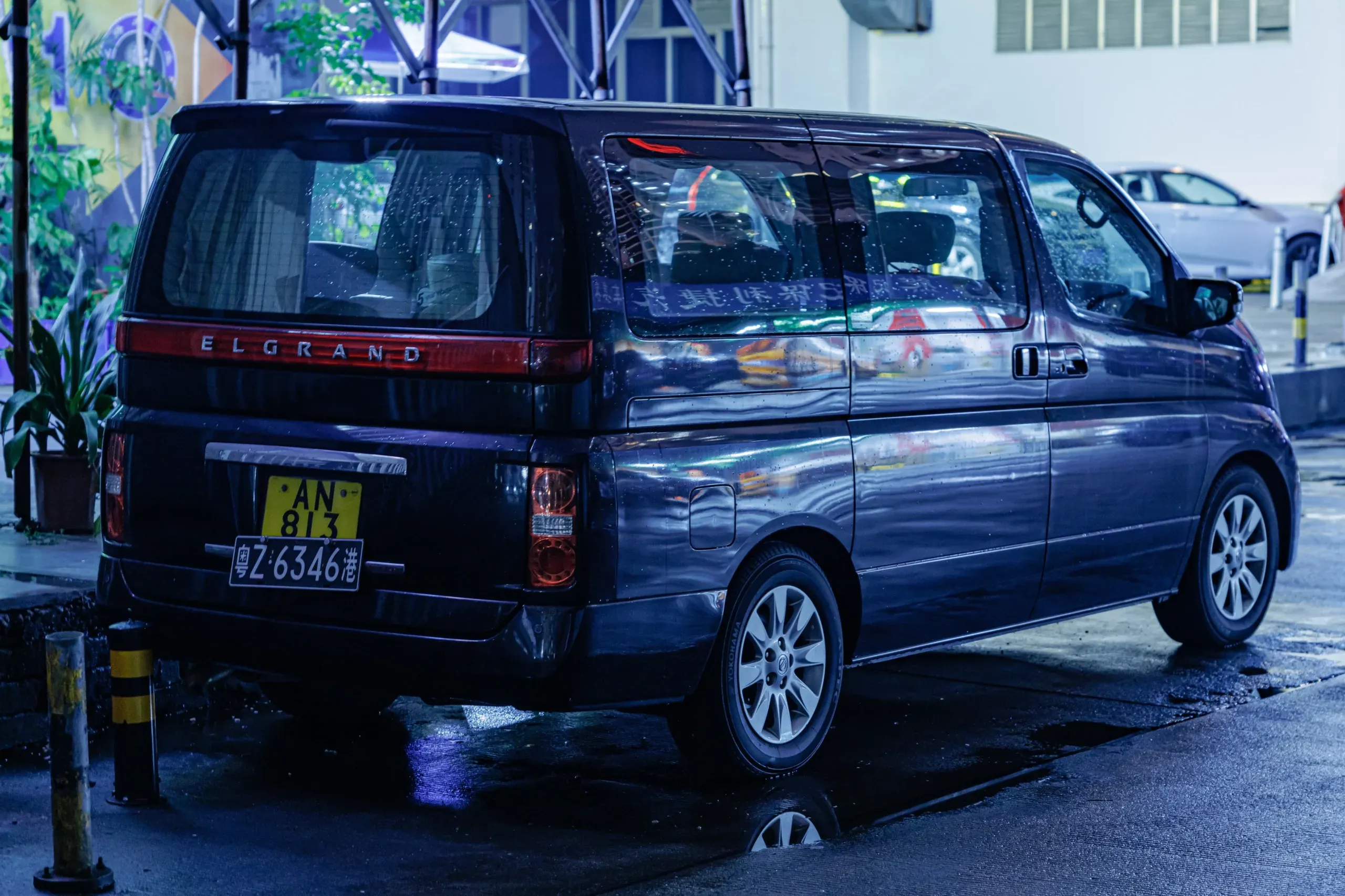
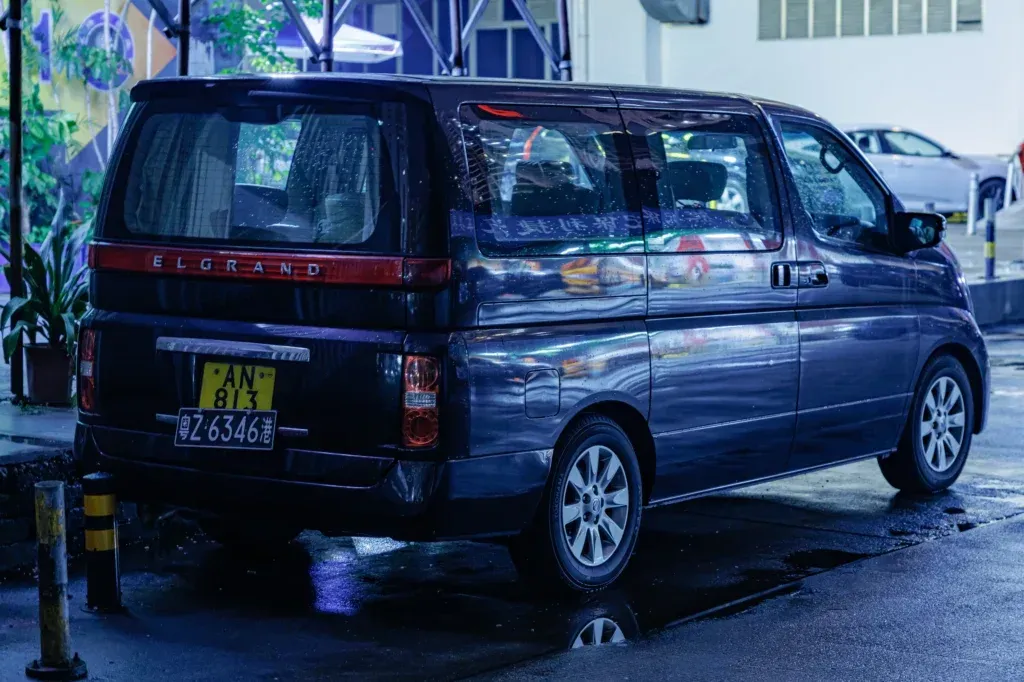
2. Nissan Elgrand E52 (2010-present)
_HONG_KONG.jpg)
The Elgrand is quieter and better finished than most people expect when they first sit in one. Nissan positioned it as a direct competitor to the Alphard in Japan, and at equivalent trim levels the interior quality arguably edges it; the E52 has a genuinely premium feel that the Alphard’s cheaper trims do not quite match.
The E52 generation brought a move away from the body-on-frame construction of the older E51, which makes it more car-like to drive. The 2.5-litre (QR25DE) is the most common import; the 3.5-litre (VQ35DE) exists but the fuel economy is punishing. Highway Star and Rider trim levels are the ones worth hunting; both include the electrically operated seating and the upgraded infotainment that makes long trips tolerable.
Importing an E52 is slightly more complex than an Alphard because Nissan’s Japanese spec parts network for the E52 in the UK is thinner. Budget for that upfront.
Street price for a clean E52 in 2026: £9,000-15,000 delivered.
What to check: The panoramic sunroof on higher spec models can develop sealing issues over time. Check the headlining around the edges. The infotainment system is Japanese-only; factor in a head unit replacement if that matters to you.
3. Honda Stepwgn RK (2009-2015)

The Stepwgn is the practical choice on this list, and there is nothing wrong with that. It is smaller than the Alphard or Elgrand, which actually makes it more useful for the majority of UK streets and car parks. The RK generation (2009-2015) is the one to focus on: it introduced Honda’s R20A 2.0-litre engine in place of the older K20, which is more fuel-efficient and has a better track record for longevity in UK-imported examples.
Parts availability is a genuine advantage. Honda dealers in the UK hold or can order a meaningful proportion of Stepwgn consumables, which matters when you are two years into ownership and need something mundane like brake discs or a thermostat. The Spada trim is the one most commonly imported and the one most worth having: it adds the panoramic roof, 16-inch alloys, and a more complete safety kit.
Street price for a clean 2012 RK Spada in 2026: £6,000-10,000 delivered.
What to check: The sliding rear door mechanism can be noisy if it has not been lubricated regularly. Test it cold. Check the CVT fluid has been changed at appropriate intervals; Honda specifies a fluid change around 40,000km and UK-imported examples often arrive with no service history for this.
4. Toyota Noah / Voxy R80 (2014-2021)

The R80 generation of the Noah and Voxy (they are mechanically identical; the Voxy has a sportier body kit and is aimed at younger buyers in Japan) brought hybrid power to what had been a purely petrol MPV range. The 1.8-litre hybrid system in the R80 returns real-world figures of around 45-50mpg in mixed UK driving, which changes the ownership cost calculation significantly compared to anything else on this list.
It is smaller than the Alphard; second-row captain’s chairs are available on higher spec variants but the packaging is less generous. As a school-run and family holiday car it is excellent. Additionally, it is incredibly narrow compared to most UK-market cars, making it incredibly easy to navigate tight spaces even though it’s a people carrier.
I own an R70 Noah, so this is the entry where forum research gives way to lived experience. I have genuinely enjoyed the R70; it is reliable, the sliding doors are a non-negotiable convenience once you have had them, and as a family workhorse it does everything you ask of it. That said, there are a couple of limitations: fuel economy sits at around 30mpg in mixed driving, which is nothing special, and mine lacks cruise control, which you notice on longer motorway runs.
The R80 hybrid however, addresses both of those gripes. The 1.8-litre hybrid system returns real-world figures of around 45-50mpg in mixed UK driving, which changes the ownership cost calculation significantly. The NVH (noise, vibration, harshness) at motorway speeds is good for the class, and cruise control is standard on most trims. The reliability record is strong across the board.
If I had the budget I would move to an R80 hybrid without hesitation; the jump in economy alone justifies the price difference. But if the R70 is more your budget, it is still a good choice and a lot of car for the money.
Street price for a clean R80 hybrid in 2026: £9,000-16,000 delivered, depending on spec. Clean R70s sit lower, typically £5,000-9,000 delivered.
What to check: On the R80 hybrid, battery health is the key concern. Any reputable importer should supply a battery health report; under 80% state of health is worth walking away from unless the price reflects it heavily. On either generation, the infotainment is Japanese-language; factor in a replacement unit or an Apple CarPlay adapter.
5. Mitsubishi Delica D:5 (2007-present)
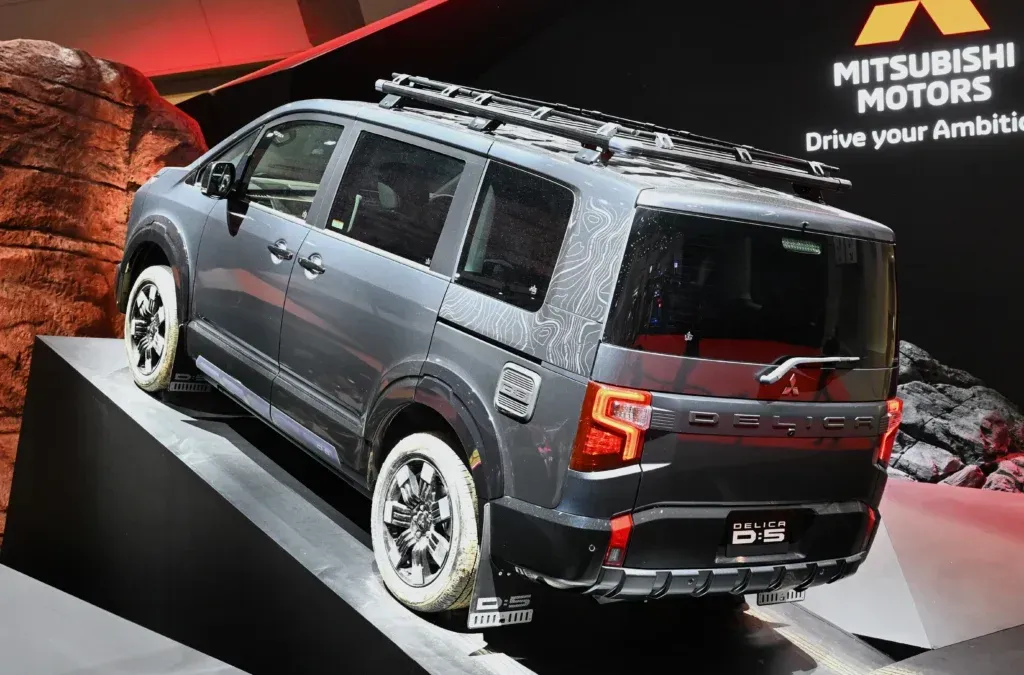
The Delica D:5 is the outlier on this list because it is the only MPV here with serious 4WD capability. The electronically controlled AWC (All Wheel Control) system offers 2WD, 4WD Auto, and 4WD Lock modes, giving it far more traction than anything else on this list. The 2019 facelift upgraded this to S-AWC for even sharper handling. It does not have a low-range transfer case like a Pajero, but it will still go places no Alphard or Elgrand would dare attempt while carrying seven people in reasonable comfort.
In Japan it is sold as a family vehicle for active outdoor families, and that positioning reads clearly in the design. Ground clearance is higher than any European seven-seater you can buy. The 2.4-litre 4B12 petrol is the more common import engine; a 2.2-litre diesel (4N14) has been available since 2012; the 2019 facelift version, paired with an 8-speed auto replacing the CVT, is the one worth seeking out for UK fuel costs.
The D:5 is not the cheapest option on this list. It is also not as refined as the Alphard or as frugal as the Noah. But nothing else here takes a family of seven up a muddy Welsh hillside without drama.
Street price for a clean D:5 with AWC in 2026: £10,000-18,000 delivered.
What to check: The CVT on the 4B12 petrol has a history of issues if not serviced properly. Verify the CVT fluid history and budget for a change if it cannot be documented. The sliding rear door seal can crack in cold climates; check for draught around the edges.
For most families the R80 Noah or Voxy hybrid is the most sensible import in 2026: the running costs are low, the reliability record is strong, and the size works on UK roads. If budget stretches and theatre matters, a 20-series Alphard is still the most compelling value proposition in the seven-seat market at any price point. The Delica D:5 is for a specific buyer who already knows they want it.
Whether you need IVA depends on the car’s age: imports over 10 years old are exempt. Most recommended examples on this list (20-series Alphard, RK Stepwgn, and pre-2016 models of the others) fall outside the IVA requirement. Newer examples (2016 onwards) will require IVA testing (£199 fee plus preparation). Budget £1,500-2,500 for the full import and compliance process on top of the purchase price, and use a BIMTA-registered importer. The cars on this list are good. The import process is manageable. The ownership costs, particularly against new European equivalents, are difficult to argue with.