
The kei truck is one of those JDM categories that sounds absurd until you see one in person. A 660cc, mid-engined, rear-wheel-drive (or four-wheel-drive) utility vehicle the size of a large shopping trolley, built to Japanese kei-class regulations and designed to navigate rice paddies, mountain villages, and Tokyo back streets with equal competence. The Honda Acty is the one that most UK buyers encounter first, but it sits within a broader category that includes the Suzuki Carry, Daihatsu Hijet, Subaru Sambar, and Mitsubishi Minicab.
This guide focuses on the Acty because it is the most commonly imported kei truck in the UK, but I have included notes on the alternatives where they offer a meaningfully different proposition. I have unfortunately not owned a kei truck (yet). This is research-led, drawing on UK importer data and the small but enthusiastic UK kei truck community.
Why a kei truck?
Before the generation breakdown, the honest question: why would anyone in the UK buy one of these?
The practical answers:
- Smallholdings and farms. A kei truck with 4WD, low range, and a flat bed will do 80% of what a full-size pickup does on a working farm, at a fraction of the purchase price, fuel cost, and insurance. It fits through gates that a Hilux cannot.
- Gardens, landscaping, and trades. The flat bed carries a surprising amount of material. The turning radius is absurd (under 4m on most models, giving a turning circle of around 7.5-8m). Parking is trivial.
- Fun. There is no other way to describe the experience of driving a mid-engined, rear-wheel-drive vehicle with 45bhp at 60mph on a B-road. It is involving in a way that no modern vehicle replicates.
The honest limitations:
- Motorway driving is marginal. 660cc and approximately 45-64bhp in a vehicle with the aerodynamic profile of a garden shed. 60-65mph is a realistic cruising speed; 70mph is achievable but unpleasant.
- Crash protection is minimal. These are kei-class vehicles designed to Japanese urban speed limits. There is no crumple zone in any meaningful sense.
- Parts availability is limited but improving as the UK import market grows.
Honda Acty generations
| Generation | Chassis code | Production | Engine | Power | Layout | 2026 UK price |
|---|---|---|---|---|---|---|
| TA/TC (1st gen) | TA (2WD) / TC (4WD) | 1977-1988 | EH 545cc | ~28bhp | Mid-engine, RWD/4WD (4WD from 1983) | £2,000-5,000 |
| HA3/HA4 (2nd gen) | HA3 (2WD) / HA4 (4WD) | 1990-1999 | E07A 660cc | ~45bhp | Mid-engine, RWD/4WD | £3,000-7,000 |
| HA6/HA7 (3rd gen) | HA6 (2WD) / HA7 (4WD) | 1999-2009 | E07Z 660cc | ~45bhp | Mid-engine, RWD/4WD | £5,000-10,000 |
| HA8/HA9 (4th gen / final) | HA8 (2WD) / HA9 (4WD) | 2009-2021 | E07Z 660cc | ~45bhp | Mid-engine, RWD/4WD | £8,000-15,000 |
Honda discontinued the Acty in 2021 after over 40 years of production. The final generation (HA8/HA9) was the most refined, but every generation shares the same fundamental layout: mid-mounted engine under the cab, rear-wheel drive with optional four-wheel drive and low range, and a flat bed or van body.
TA/TC: the original (1977-1988)

The one that started it all. Honda launched the Acty in July 1977 as a successor to the TN360, and the first generation ran for over a decade with only incremental changes. The engine was a 545cc EH two-cylinder producing approximately 28bhp — modest even by kei truck standards — driving the rear wheels through a four-speed manual gearbox.
The layout established the template that every subsequent Acty would follow: mid-mounted engine behind the cab, rear-wheel drive, flat bed with three-way opening sides. Honda added a van variant in 1979 and a more comfort-oriented “Street” trim for the van in 1980, aimed at passenger rather than cargo use. A five-speed manual became available later in the run, and part-time 4WD was added as an option in 1983 (the TC chassis code denotes 4WD variants).
What to know
- The EH two-cylinder is simple and durable but genuinely slow. 28bhp in a vehicle with no aerodynamics means motorway use is essentially off the table.
- Pre-1990 kei vehicles used the older 550cc class regulations. The 545cc displacement is a product of that era.
- First-gen Actys are now 38-49 years old. Rust is the primary concern — if the chassis rails and cab mounts are solid, the mechanicals are straightforward to maintain.
- Fewer of these survive in importable condition compared to later generations. Japanese farm-use examples occasionally appear at auction, but good ones command a premium from collectors.
- 4WD models (TC) from 1983 onwards are more desirable for practical use but rarer.
UK importability
- All TA/TC models are well over 10 years old and exempt from IVA.
- ULEZ: Pre-Euro. Not compliant.
- These are increasingly collector vehicles. Condition and provenance matter more than specification.
- Best buy: 1983-1988 TC 4WD truck, five-speed manual (if available), £3,000-5,000 delivered
Note on the 1988-1990 transition: When the second generation launched in 1988, it initially used the HA1/HA2 chassis codes with a new E05A 550cc three-cylinder engine. In 1990, Japanese kei regulations increased the displacement limit from 550cc to 660cc, and Honda responded with the HA3/HA4 revision using the E07A 660cc engine. The HA1/HA2 variants are rare in UK imports — nearly all second-gen Actys on the market are the post-1990 HA3/HA4.
HA3/HA4: the classic (1990-1999)
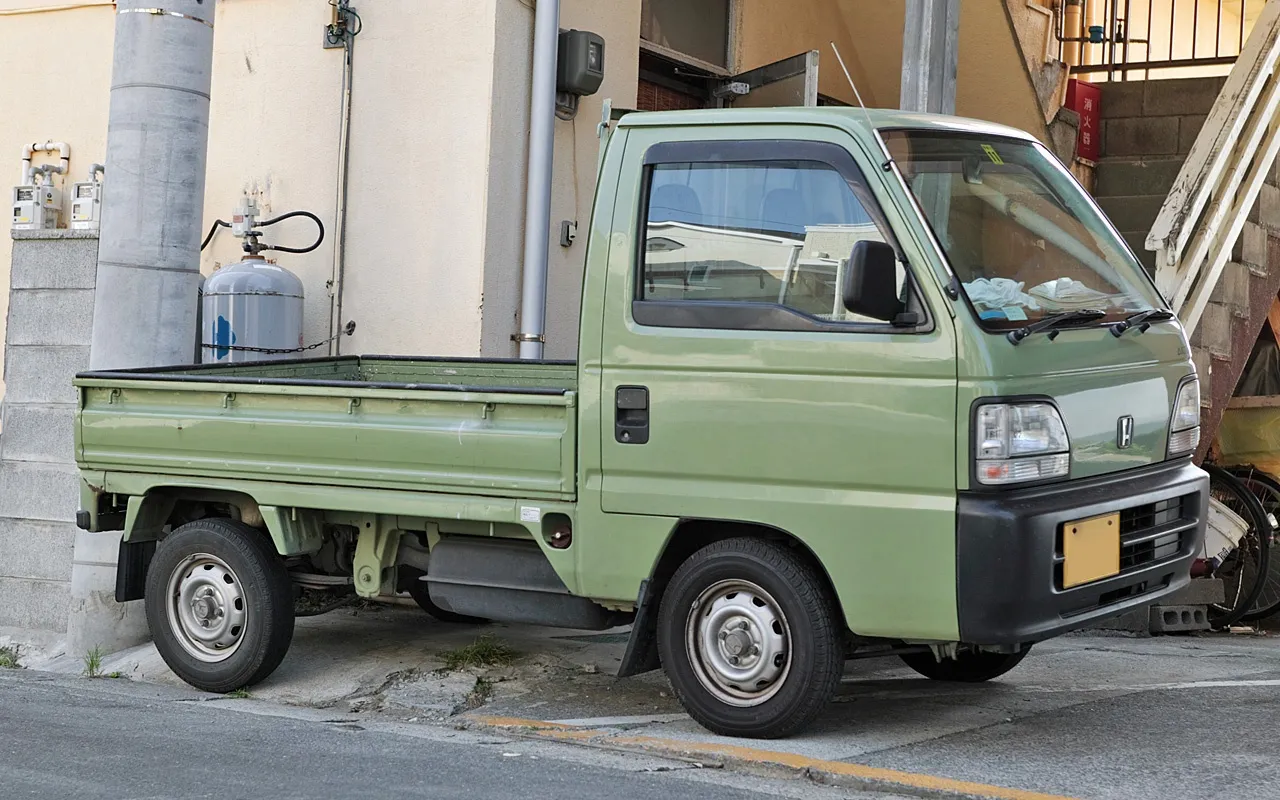
(Image Credit: Tennen-Gas, CC BY-SA 3.0)
The HA3/HA4 is the generation that most UK importers started with, because the age and simplicity of these vehicles make the import process straightforward. The E07A engine is a 660cc three-cylinder producing approximately 45bhp. This is not a misprint. 45bhp moves approximately 750kg of kei truck at a pace that is best described as ‘deliberate’.
What makes it work
The mid-engine layout gives the Acty surprisingly good traction and balance. The engine sits under the cab floor, between the front seats and the rear axle, which puts weight over the driven wheels and keeps the bed free for cargo. The 4WD system (on HA4 variants) is part-time with a low range transfer case, which gives genuine off-road capability in a vehicle that weighs less than most motorcycles.
Truck vs van
The Acty came in two body styles:
- Truck (flat bed): The utility workhorse. Open bed with fold-down sides. This is the one most commonly imported for farm and smallholding use.
- Van (enclosed): A fully enclosed cargo area behind the cab. Better for weather protection and security; less versatile for bulky loads. The van variant is sometimes called the Acty Van or Honda Street.
Common faults
- The E07A engine is reliable but underpowered. It will run for a very long time if oil changes are maintained, but it has no power reserve. Hills are a commitment.
- Rust. HA3/HA4 models are now 25-35 years old. Japanese farm-use examples can be corroded underneath despite clean bodywork. Inspect the chassis rails, cab mounts, and bed floor.
- The five-speed manual gearbox is robust but the synchros on second and third gear can wear on higher-mileage examples.
- Electrical systems are simple and generally reliable; the main concern is corrosion on connectors.
UK importability
- All HA3/HA4 models are well over 10 years old and exempt from IVA.
- ULEZ: Pre-Euro 4. Not compliant.
- Insurance: very low groups (5-12). Some insurers classify kei trucks as commercial vehicles; check the classification.
- Road tax: low or zero depending on emissions band.
- Best buy: 1995-1999 HA4 4WD truck, five-speed manual, £4,000-6,500 delivered
Reference image: Honda Acty category on Wikimedia Commons — multiple generations, truck and van variants. CC BY-SA; confirm per file.
HA6/HA7: the refinement (1999-2009)
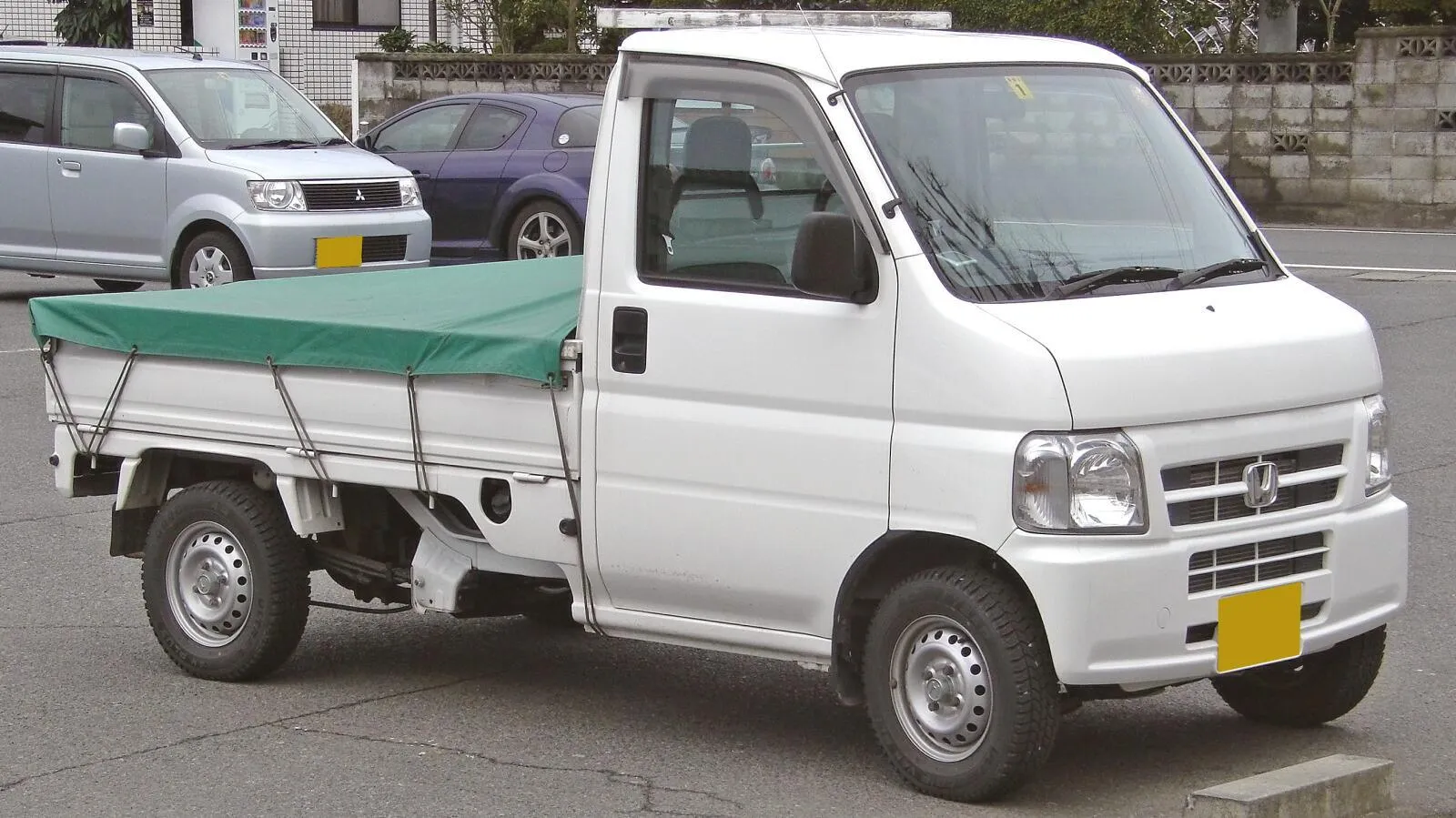
The HA6/HA7 replaced the E07A with the E07Z, a revised version of the same 660cc three-cylinder. Power remained at approximately 45bhp (Honda was not chasing performance here), but the E07Z is slightly more refined, slightly more fuel-efficient, and slightly quieter. The cab interior received modest improvements: better seats, improved ventilation, and a revised dashboard.
The fundamental formula did not change. Mid-engine, rear-drive or four-wheel-drive, flat bed or van body, minimal weight, maximum utility.
What changed
- Improved crash structure (by kei truck standards; still minimal by car standards).
- Revised suspension geometry for slightly better on-road manners.
- Optional automatic transmission (three-speed) on some variants, though the manual remains the correct choice.
- Power steering became standard on higher trims.
Common faults
- Same general profile as the HA3/HA4: reliable engine, rust concern on older or farm-use examples, synchro wear on the manual gearbox.
- The automatic transmission is sluggish and robs what little power exists. Buy the manual.
- CV joints on 4WD models can wear with off-road use. Check for clicking on full lock.
UK importability
- All HA6/HA7 models are now over 10 years old and exempt from IVA in 2026.
- ULEZ: Euro 3 equivalent on most examples. Not ULEZ compliant (Euro 4 is the minimum for petrol vehicles). Note that JDM vehicles carry Japanese emissions standards, not Euro ratings; UK importers assess the equivalent standard based on the vehicle’s age.
- Insurance: same low groups as the HA3/HA4.
- Best buy: 2002-2007 HA7 4WD truck, five-speed manual, £6,000-9,000 delivered
HA8/HA9: the final generation (2009-2021)
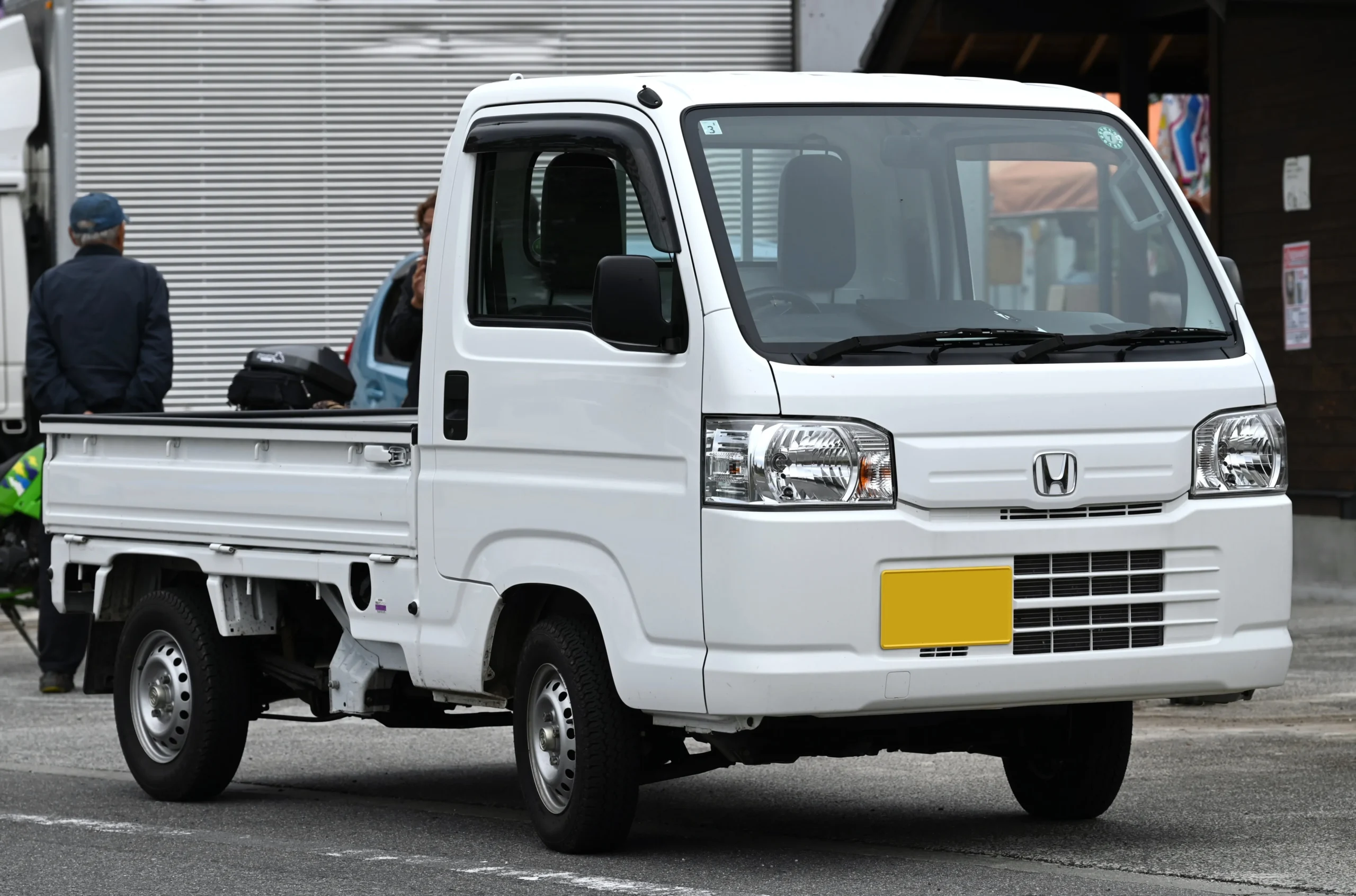
The last Acty. Honda refined the E07Z further, added additional safety features (ABS became available), and improved the interior to a level that, while still spartan by car standards, is comfortable enough for daily use. The HA8/HA9 is the most refined kei truck Honda ever built, and the one that fetches the highest prices.
For UK importers, the HA8/HA9 is the generation to target if budget allows. The newer production means better condition, better parts availability, and a vehicle that will be easier to live with long-term.
Common faults
- Fewer age-related issues than earlier generations, but the same fundamental concerns apply: check for rust (particularly on farm-use examples), check the manual gearbox synchros, and verify 4WD engagement.
- The E07Z in HA8/HA9 specification is the most reliable version of the engine. Proactive maintenance (oil changes, timing belt at 100,000km) is all it requires.
UK importability
- HA8/HA9 models from 2017-2021 (under 10 years old in 2026) require IVA. Earlier HA8/HA9 models (2009-2016) are exempt. Budget £400-800 for IVA, which includes the test fee (approximately £200-300) plus common modifications needed to pass: rear fog light, speedometer conversion to mph, and headlight beam adjustment.
- ULEZ: Euro 4 or above on most examples. Likely compliant.
- Insurance: low groups (8-15).
- Best buy: 2015-2021 HA9 4WD truck, five-speed manual, £9,000-14,000 delivered
The alternatives: Suzuki Carry, Daihatsu Hijet, Subaru Sambar
The Acty is not the only option. The kei truck class includes three other major manufacturers, and each has a loyal following:
Suzuki Carry
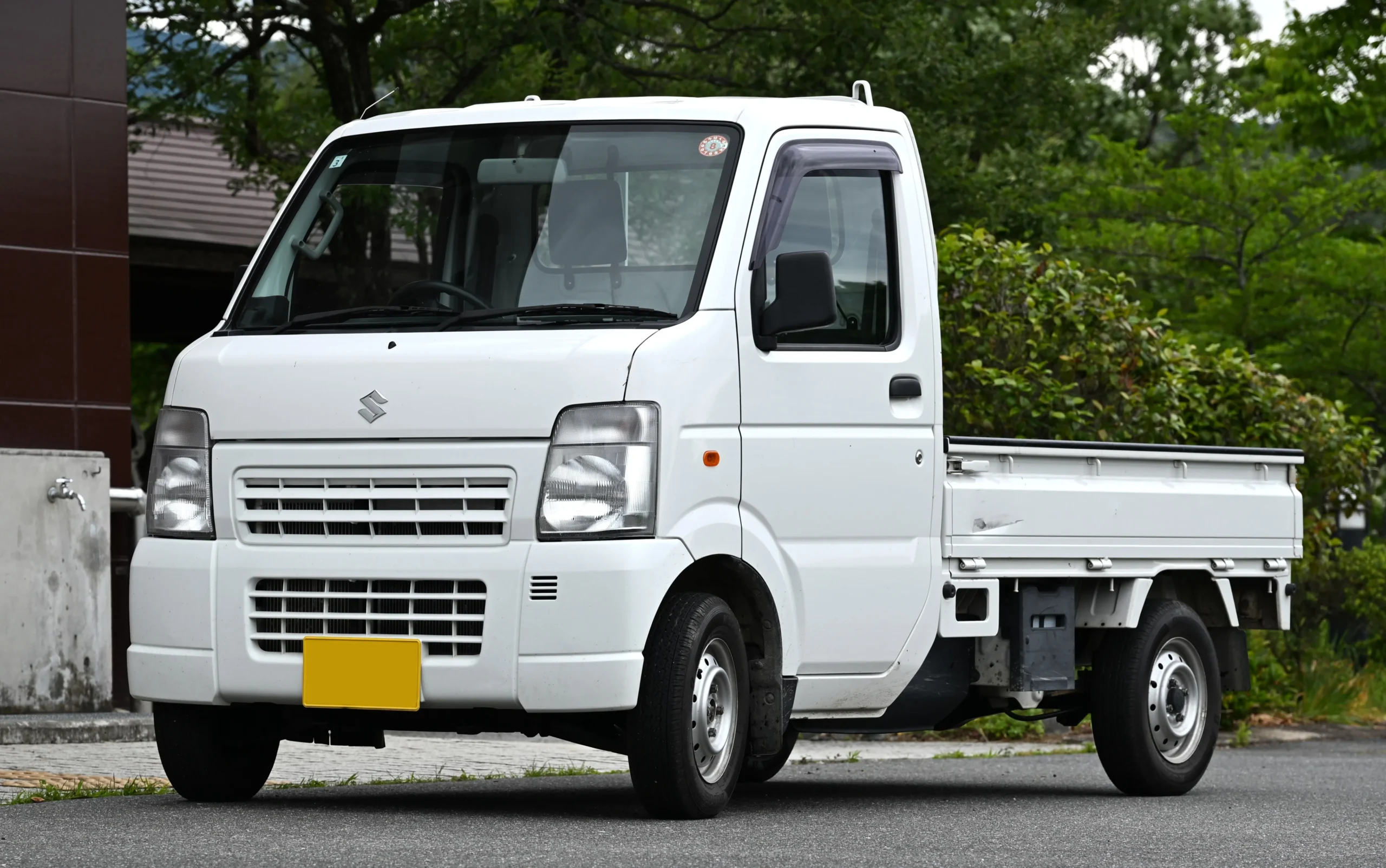
The Carry is the Acty’s closest competitor and the one most commonly mentioned as an alternative. Key differences:
- Engine position: The Carry moved to a front-engine layout from 1999 (the DA52T/DB52T generation onwards; the later DA62T revision continued this layout from approximately 2002). Earlier Carries are mid-engined like the Acty.
- Availability: The Carry is more common at Japanese auction than the Acty, which can mean slightly lower prices for equivalent condition and specification.
- Character: The front-engined Carries have a different weight distribution and driving feel; some owners prefer the Acty’s mid-engine balance.
Daihatsu Hijet
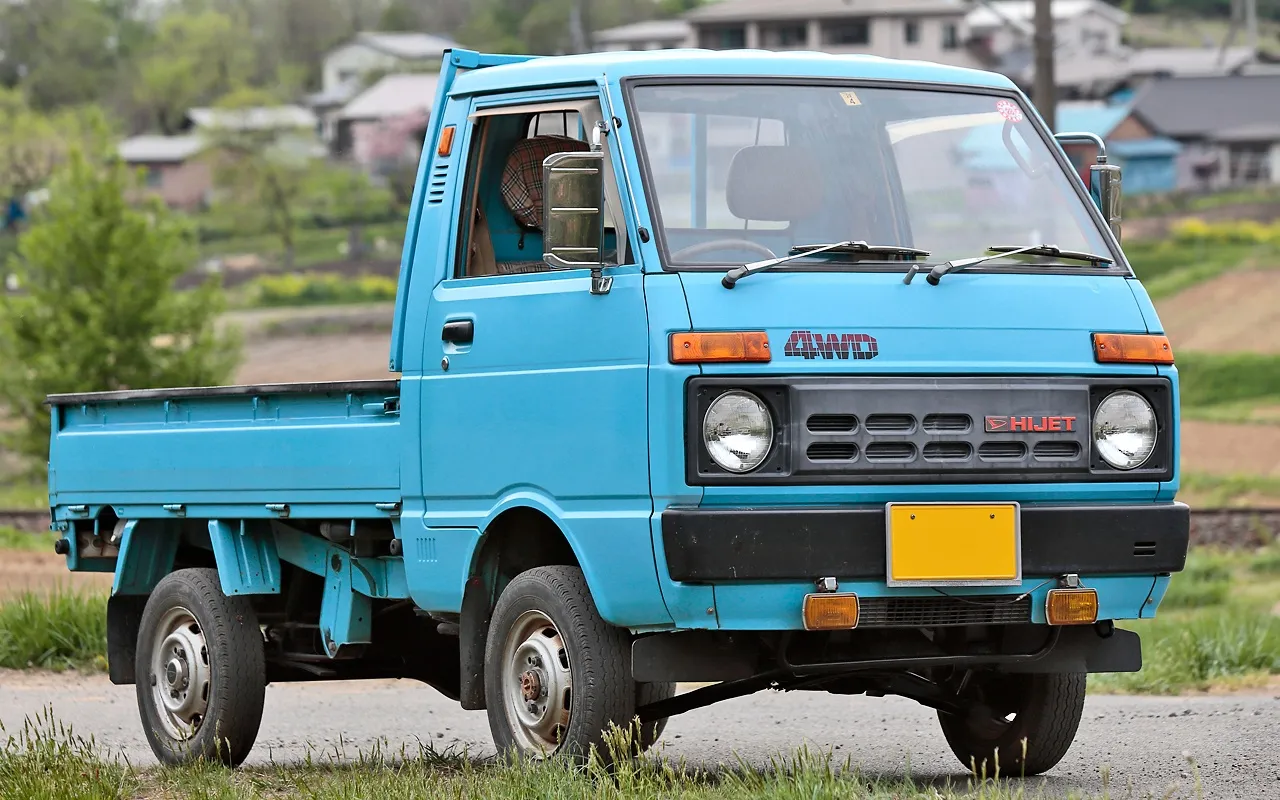
The Hijet is the longest-running kei truck nameplate. Key differences:
- Engine: The Hijet uses Daihatsu’s own 660cc three-cylinder engines, which are reliable and well-documented.
- Jumbo cab option: Daihatsu offered an extended-cab variant (the Hijet Jumbo) with a longer cab and more legroom. This is a meaningful advantage for taller drivers.
- Parts: Daihatsu parts availability in the UK is generally good, partly because of the brand’s historic presence in the UK market.
Subaru Sambar
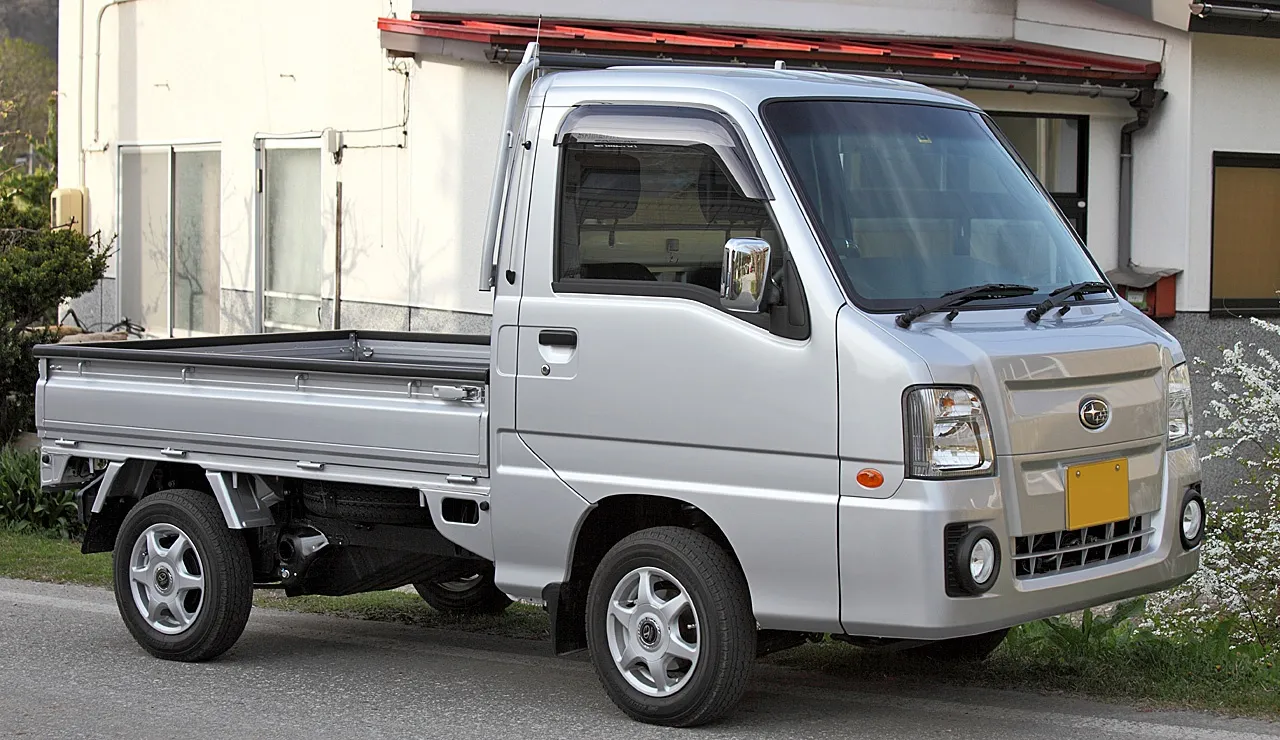
The oddball of the group:
- Engine: The Sambar used a 660cc four-cylinder (EN07), which is unusual for the kei class and gives it a smoother character than the three-cylinder alternatives. Supercharged variants were available but less common than the naturally aspirated versions; the supercharged EN07 offered notably more refinement and power.
- Layout: Rear-engine, rear-wheel-drive (with optional 4WD). The only rear-engined kei truck. This gives the Sambar distinctive handling and excellent traction on loose surfaces.
- Note: Subaru discontinued its own Sambar production in 2012; later Sambars are rebadged Daihatsu Hijets.
Which alternative?
The differences between kei trucks are smaller than the similarities. All of them will carry a similar payload, fit through the same gates, and cruise at the same modest speed. Choose based on:
- Availability and price at the time of purchase (auction stock varies).
- Cab size if you are tall (Hijet Jumbo wins here).
- Engine preference if you care about smoothness (Sambar supercharged four-cylinder) or simplicity (Acty or Carry three-cylinder).
- Layout preference if you care about handling balance (Acty mid-engine, Sambar rear-engine, later Carry front-engine).
How to buy a kei truck in the UK
The import process is the same BIMTA-registered importer route as any JDM vehicle, with a few kei-truck-specific notes:
- Specify farm use vs road use. Japanese auction kei trucks fall into two broad categories: farm-use vehicles (often low mileage but hard-used, potentially corroded, and sometimes without road registration in Japan) and road-use vehicles (higher mileage but maintained to road standards). For UK road registration, a road-use vehicle with documented Japanese shaken (road worthiness test) history is preferable.
- Check the bed. The flat bed on a kei truck is a wear item. Check for rust, bent sides, and damaged hinges. A replacement bed is available but adds cost.
- Budget for tyres. JDM kei trucks often arrive on Japanese-market tyres that may not meet UK standards or preferences. Budget for a set of UK-sourced tyres; the small size (typically 12-inch) keeps the cost low.
- Consider the van variant if weather protection matters. The enclosed cargo area adds security and keeps loads dry; the trade-off is reduced versatility for bulky items.