
Japan was building hybrid family cars a decade before Europe took the technology seriously. Toyota had the Prius in 1997; by the mid-2000s, the hybrid powertrain had spread across Toyota and Honda’s MPV, saloon, and estate ranges. The result, in 2026, is a deep pool of well-proven hybrid imports that deliver 40-60mpg, seat five to eight people, and cost significantly less than equivalent European hybrid or plug-in vehicles.
This list focuses on hybrids that work as family cars: seating for at least five, a usable boot, and real-world fuel economy that justifies the hybrid premium. I have driven one of these (the Noah hybrid); the rest are research-led, drawing on owner data, importer feedback, and specification sheets.
1. Toyota Alphard Hybrid (AH20 / AH30)
The luxury seven-seater that returns 40mpg.
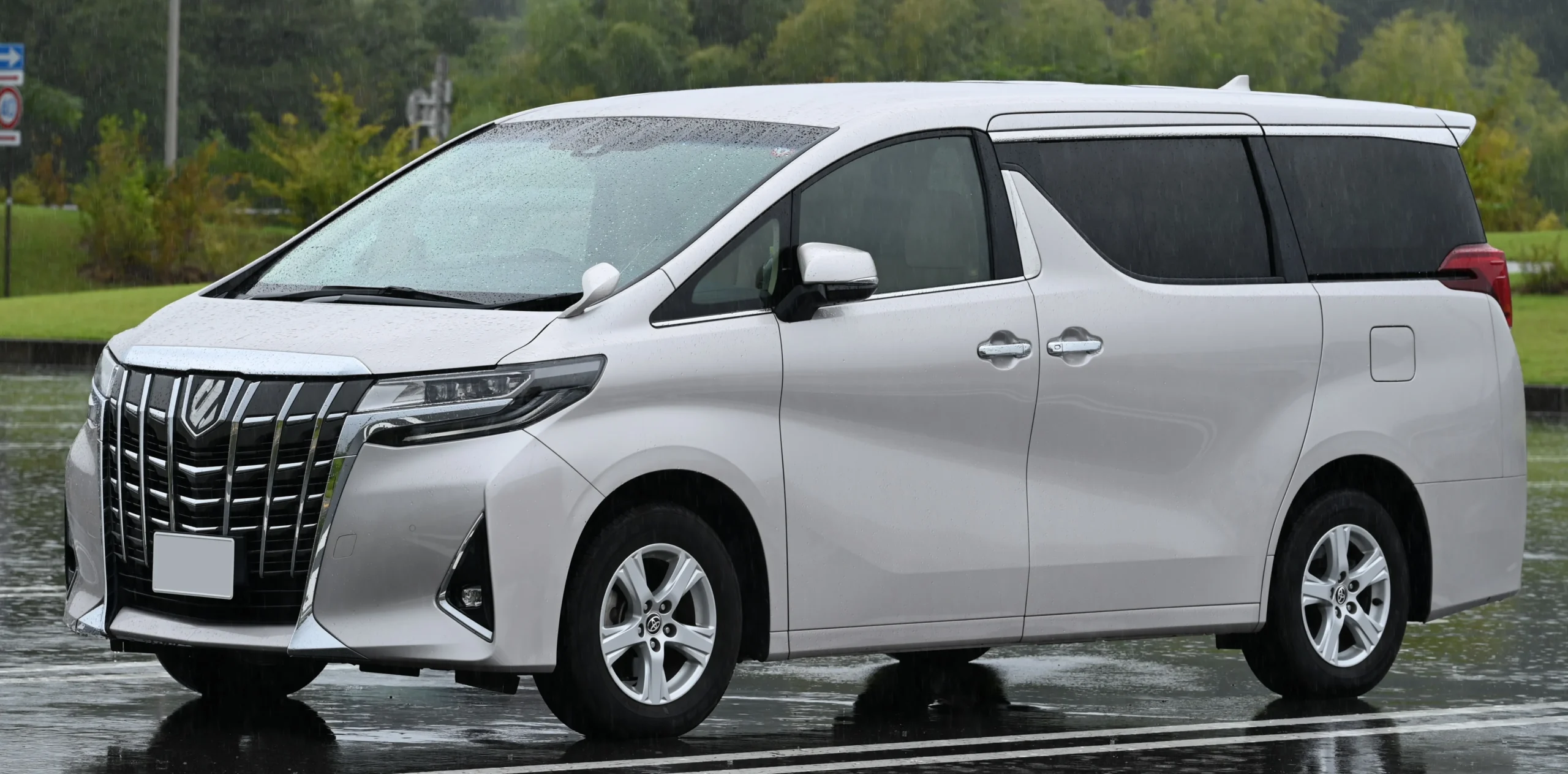
The Alphard hybrid is the car that proves a 2,100kg luxury MPV does not have to drink fuel like a 2,100kg luxury MPV. The AH20 hybrid (2011-2015) returns 35-42mpg in real-world driving; the AH30 hybrid (2015-2023) manages 38-48mpg. Both seat seven or eight in genuine comfort, with electrically adjustable captain’s chairs in the second row and enough space in the third row for actual adults.
The hybrid system uses Toyota’s proven Hybrid Synergy Drive: a 2.4-litre Atkinson-cycle petrol engine (AH20) or 2.5-litre (AH30) paired with electric motors. The battery sits under the floor, preserving interior space. E-Four (electric rear axle AWD) is available on the AH30, which adds all-weather capability without the fuel penalty of a mechanical AWD system.
Why it is here: No European manufacturer offers a seven-seat hybrid MPV with this level of interior quality at any price point. The Alphard hybrid is the family car that does not compromise.
- Best buy: 2012-2015 AH20 Hybrid G facelift, £12,000-16,000 delivered. The AH30 Hybrid G (2017-2019, £22,000-28,000) if budget allows.
- ULEZ: Compliant (Euro 4+ on AH20; Euro 5/6 on AH30).
- Real-world economy: 35-48mpg depending on generation and driving style.
2. Toyota Noah / Voxy Hybrid (R80)
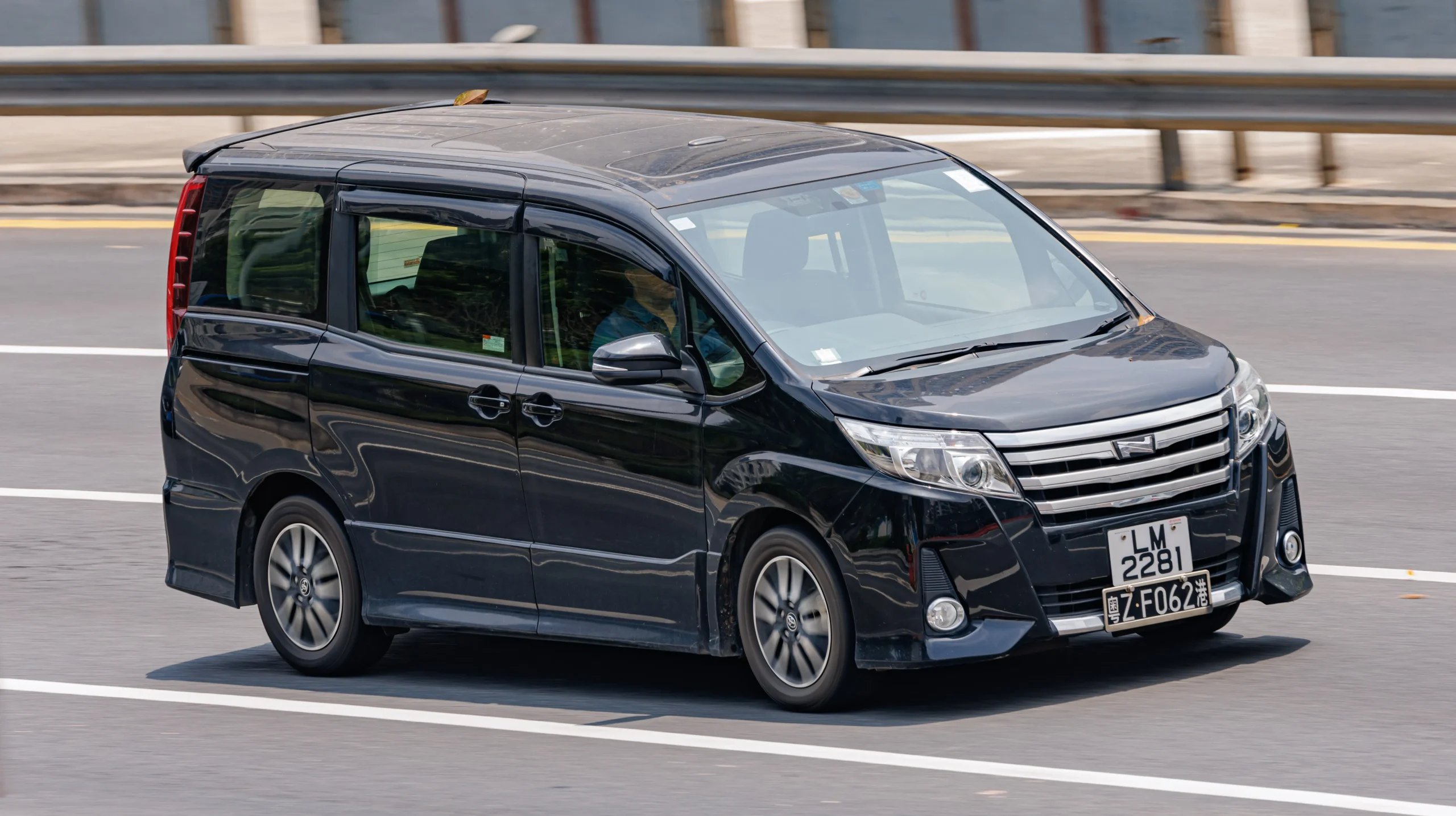
The practical alternative to the Alphard. The Noah and Voxy are Toyota’s mid-size MPVs: smaller, lighter, and cheaper than the Alphard, but still seating seven or eight with sliding doors and a flat floor. The R80 hybrid (2014-2021) pairs a 1.8-litre Atkinson-cycle engine with Toyota’s hybrid system, returning 42-52mpg in real-world driving.
The Noah is the conservative-styled version; the Voxy is the sportier-looking variant. Mechanically identical. The Esquire sits between them as a slightly more premium option. All three share the same hybrid powertrain and the same interior space.
Why it is here: The Noah/Voxy hybrid is the most practical hybrid MPV you can import for under £15,000. It is the one I would recommend to any family that needs seven seats and wants to halve their fuel bill.
- Best buy: 2016-2019 Noah Hybrid G, £10,000-14,000 delivered. The Voxy Hybrid V (same car, sportier trim) is typically £500-1,000 more.
- ULEZ: Compliant (Euro 5/6).
- Real-world economy: 42-52mpg.
3. Honda Fit / Jazz Hybrid (GP5/GP6)
The small car that returns 60mpg and swallows a bicycle.
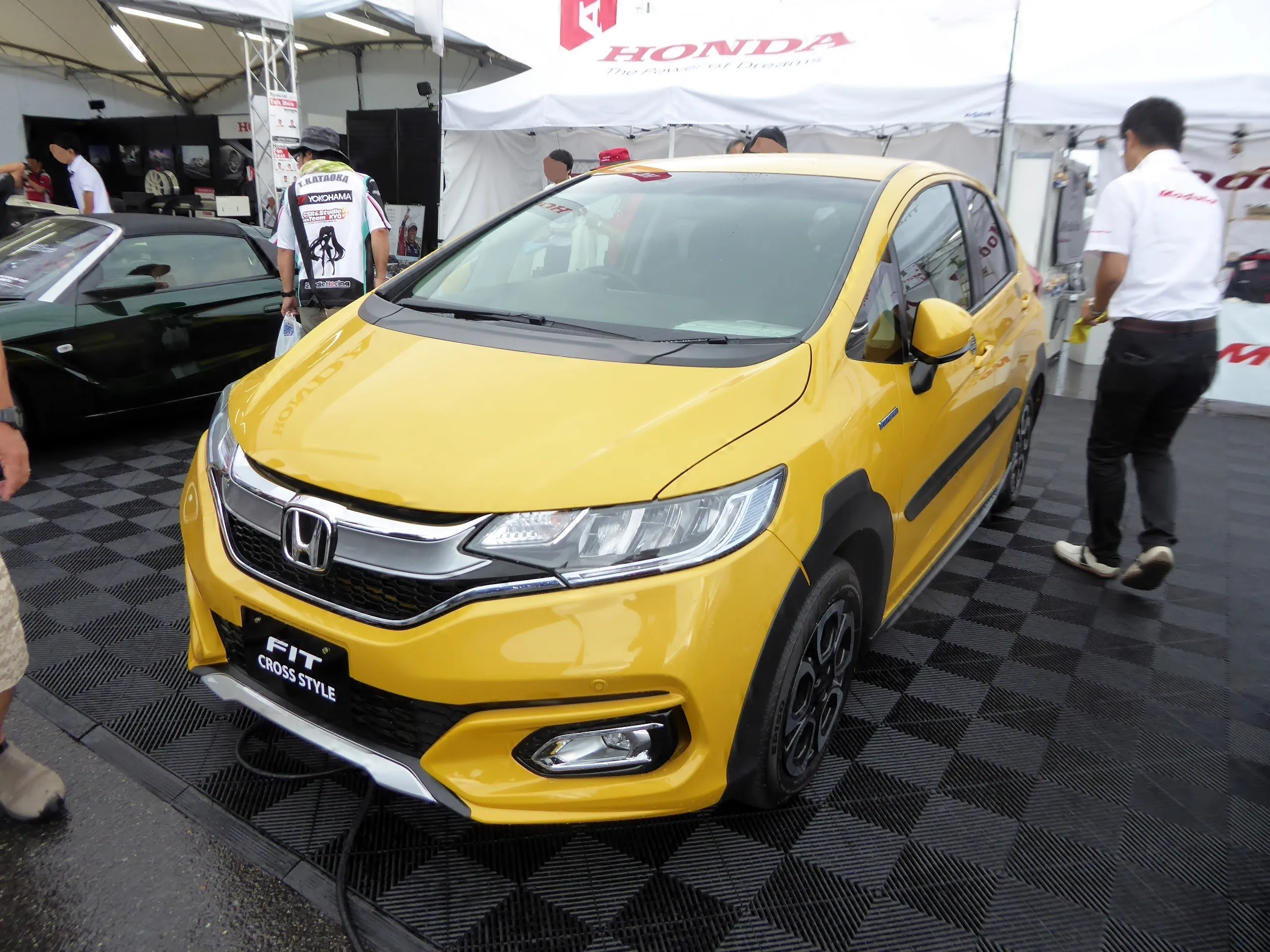
The Honda Fit (sold as the Jazz in the UK, though JDM imports retain the Fit name) is the small car with the impossible boot. Honda’s Magic Seats fold in ways that defy the laws of packaging: flat, theatre-style, or completely upright to create a tall cargo space. The hybrid version (GP5/GP6, 2013-2020) adds Honda’s i-DCD hybrid system (a 1.5-litre Atkinson-cycle engine with a seven-speed dual-clutch transmission and integrated electric motor), returning 50-62mpg in real-world driving.
This is not a family car in the traditional sense (it seats five, but the rear is tight for three adults). It is a family car in the sense that it carries everything a family needs to carry, costs almost nothing to fuel, and parks in spaces that a Qashqai cannot reach.
Why it is here: The Fit hybrid is the cheapest-to-run JDM import on this list, and its packaging ingenuity makes it more practical than cars twice its size.
- Best buy: 2017-2020 Fit Hybrid F or L package, £6,000-9,000 delivered.
- What to check: The i-DCD dual-clutch transmission was recalled multiple times in Japan for clutch actuator failures and juddering. Later production years (2017+) had revised software and hardware, but verify full service history and test for any hesitation or shudder at low speeds. Budget for a DCT fluid change on arrival regardless.
- ULEZ: Compliant (Euro 6).
- Real-world economy: 50-62mpg.
4. Toyota Estima Hybrid (AHR20)
The mid-size MPV hybrid that predates everything.
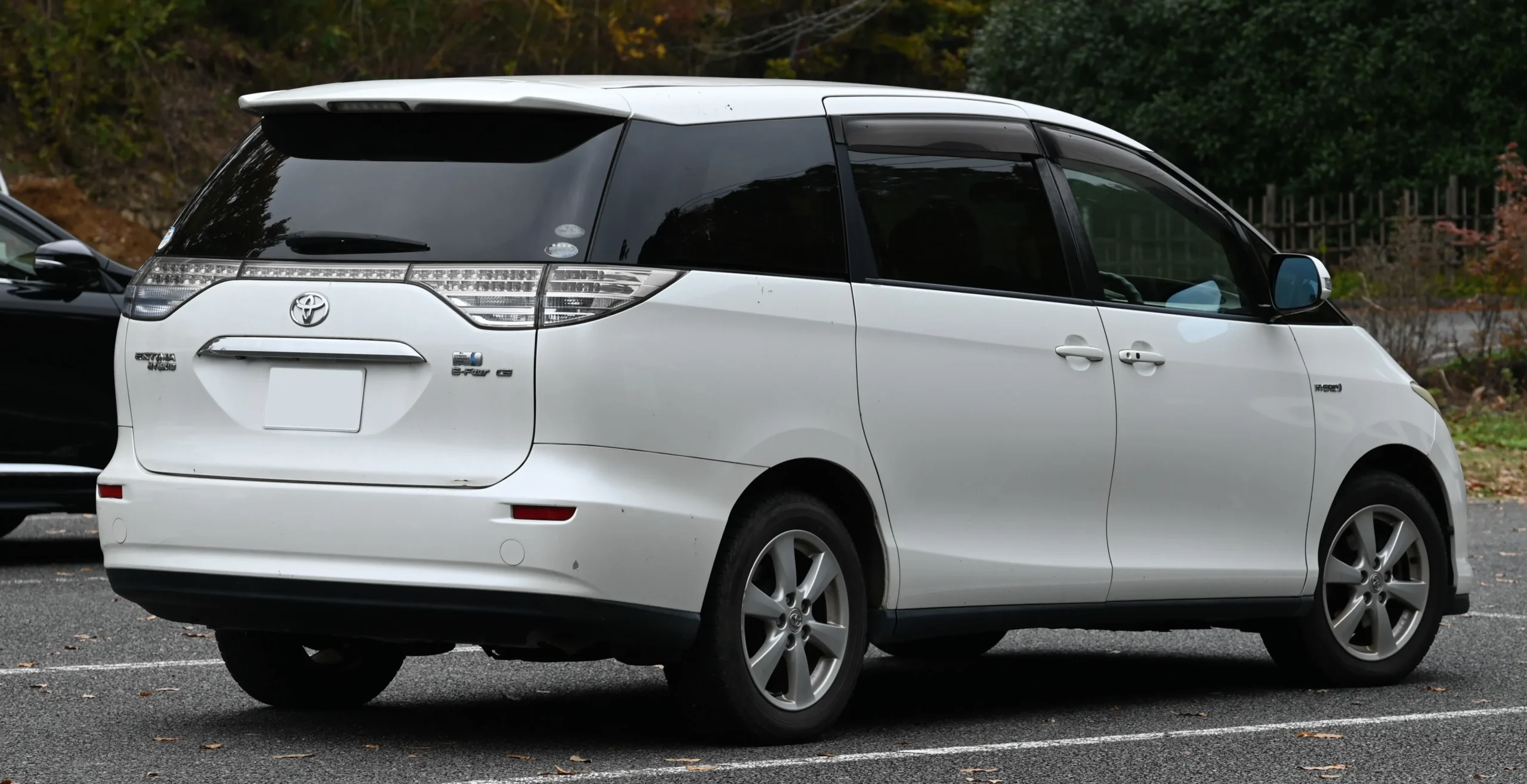
The Estima Hybrid (AHR20, 2006-2019) is one of the earliest hybrid MPVs Toyota built, and the technology has aged remarkably well. The powertrain pairs a 2.4-litre Atkinson-cycle engine with front and rear electric motors (E-Four AWD as standard on the hybrid), returning 32-40mpg in a vehicle that seats seven or eight.
The Estima sits between the Noah and the Alphard in Toyota’s MPV hierarchy: bigger and more refined than the Noah, less opulent than the Alphard. It is the middle-ground choice for families who want hybrid economy and genuine seven-seat space without paying Alphard prices.
Why it is here: The Estima Hybrid is the most affordable hybrid AWD seven-seater available in the UK in 2026. If you need winter traction and family space on a budget, this is the car.
- Best buy: 2012-2016 Estima Hybrid Aeras, £8,000-13,000 delivered.
- ULEZ: Compliant (Euro 4+ on all AHR20 hybrids).
- Real-world economy: 32-40mpg.
5. Honda Freed Hybrid (GB7/GB8)
The six-seater hybrid that fits in a UK parking space.
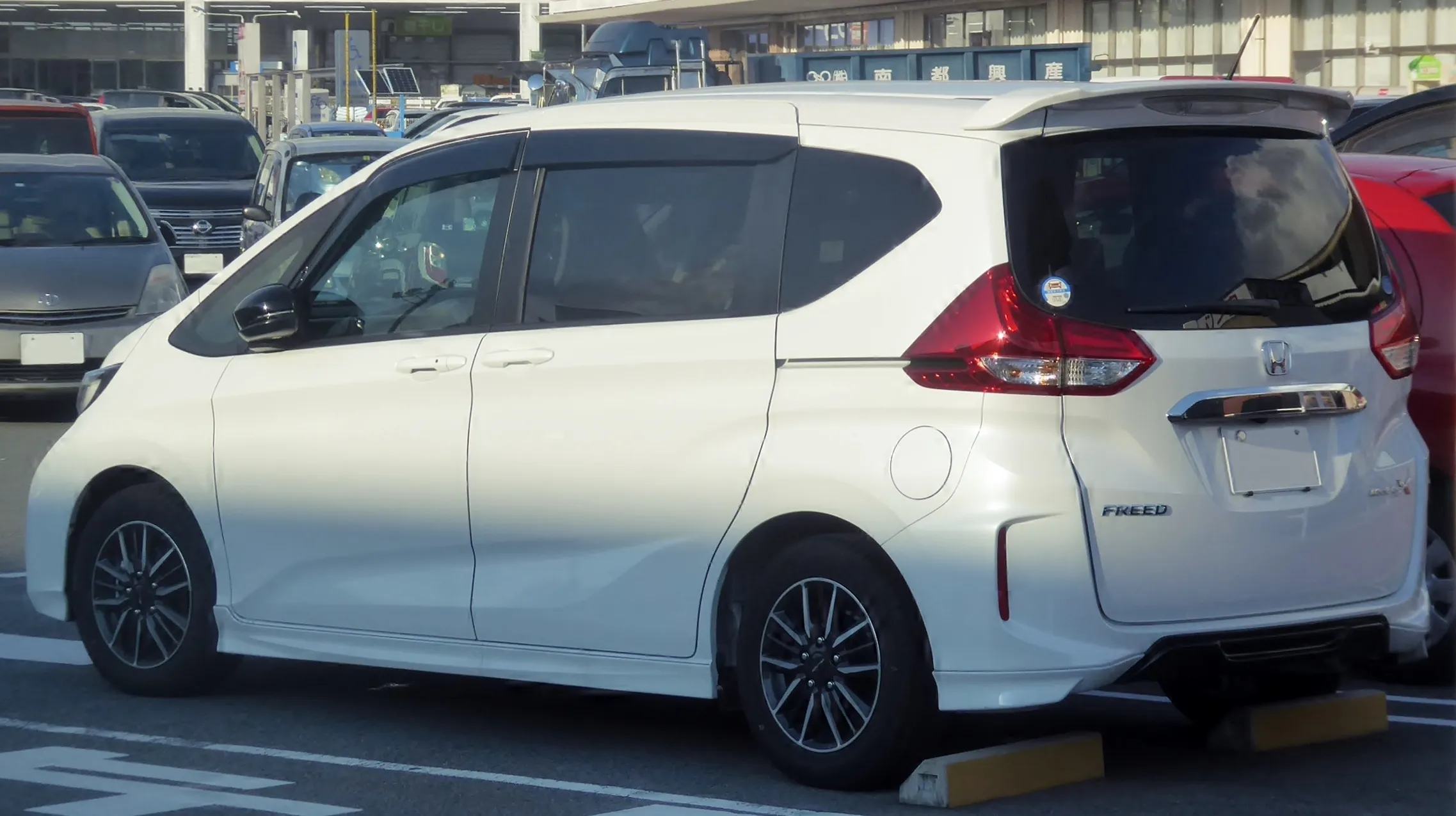
The Honda Freed is a compact MPV that seats six (in 2+2+2 captain’s chair configuration) or seven (2+3+2 bench configuration) within a footprint slightly shorter than a Ford Focus. The hybrid version (GB7, 2016-present) uses Honda’s i-DCD system with a 1.5-litre engine, returning 45-55mpg in real-world driving.
The Freed is the MPV for families who live in cities and cannot park an Alphard. It has sliding rear doors (essential for tight car parks), a low floor for easy child access, and enough interior space to carry a pushchair, a dog, and a week’s shopping simultaneously. It is not a long-distance cruiser (the 1.5-litre hybrid is adequate rather than powerful on motorways), but for urban and suburban family use, it is remarkably well-suited.
Why it is here: The Freed hybrid fills the gap between the Fit (too small for a family of four-plus) and the Alphard (too large for city parking). It is the Goldilocks hybrid MPV.
- Best buy: 2019-2023 Freed Hybrid G Honda Sensing, £10,000-15,000 delivered.
- What to check: The Freed hybrid uses the same i-DCD dual-clutch system as the Fit hybrid, with the same documented reliability concerns around the clutch actuator. Later models are more reliable, but verify service history and test for low-speed juddering.
- ULEZ: Compliant (Euro 6).
- Real-world economy: 45-55mpg.
The pattern
Every car on this list is a Toyota or Honda. This is not bias; it is the reality of the JDM hybrid market in 2026. Toyota and Honda invested in hybrid technology earlier, more broadly, and more successfully than any other Japanese manufacturer. Nissan has the e-Power system (a series hybrid that uses a petrol engine as a generator), which is excellent in the Note and Serena, but those vehicles are newer and command higher import prices. Mitsubishi has the Outlander PHEV, but it is not a JDM-exclusive import. Suzuki and Mazda were late to hybrids.
If the market expands to include the Nissan Serena e-Power and the Toyota Sienta hybrid (both of which are becoming more common at auction), this list will need updating. For now, these five represent the best combination of proven technology, reasonable price, and genuine family practicality.
How to buy a JDM hybrid in the UK
The import process is the same as any JDM vehicle. For hybrids specifically:
- Insist on a hybrid battery health report before purchase. The battery is the single most expensive component in any hybrid; a degraded battery reduces both economy and performance. Most importers can arrange a battery health check at auction.
- Check the CVT or transmission fluid history. Toyota hybrids use an e-CVT (electronically controlled continuously variable transmission) that requires periodic fluid changes. Honda’s i-DCD uses a dual-clutch unit that is more complex; verify service history.
- Budget for a UK-spec head unit. All JDM hybrids have Japanese-language infotainment. An Apple CarPlay adapter or replacement head unit costs £200-500.
The full import and IVA process is covered in our importing FAQ series.