
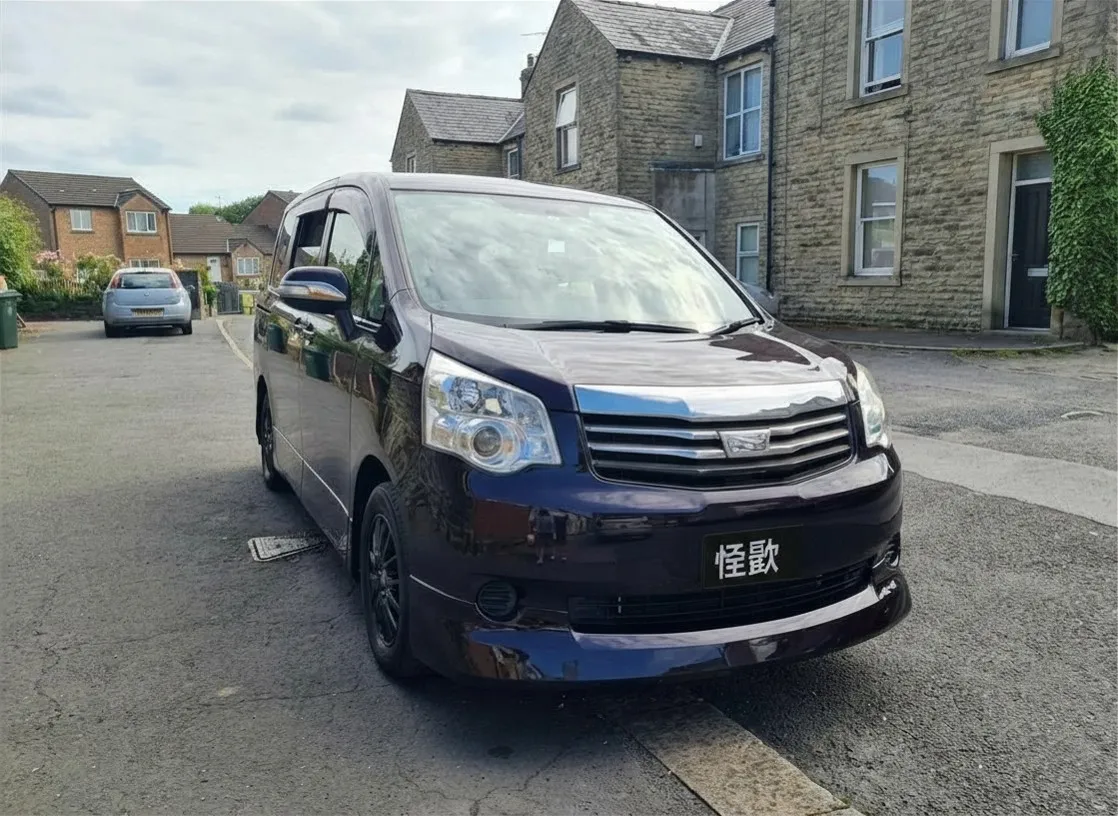
Importing a car from Japan is not complicated, but it is poorly documented. Most of the information online is fragmented across forum threads, dealer FAQs that stop at the point where you hand over money, and government pages written in a dialect of English that no human actually speaks.
This guide covers every step from deciding what you want to the moment the car sits on your driveway with UK plates. It assumes you are using a UK-based importer (the route roughly 90% of private buyers take). If you are importing directly through a Japanese auction agent, the middle steps change but the bookends are the same.
Step 1: Decide what you want
Timeline: days to weeks, depending on how decisive you are.
Before you contact an importer, know these three things:
- The model and approximate year range. ‘I want a Toyota Alphard, 2015 or newer’ is a brief an importer can work with. ‘I want something Japanese and cool’ is not.
- Your budget, all-in. This means the total you can spend including the car, shipping, duty, VAT, IVA (if needed), registration, and the importer’s fee. A good importer will give you a breakdown, but you need a ceiling figure.
- Your non-negotiables. Colour, trim level, maximum mileage, hybrid or petrol, automatic or manual. The more specific you are, the longer the search takes but the better the result.
If you are unsure about the model, read the listicle and deep-dive articles on this site first. That is literally what they are for.
Step 2: Choose your importer
Timeline: a few days of research.
The importer is the most important decision in the entire process. A good importer handles Steps 3-9 on your behalf and keeps you informed throughout. A bad importer takes your deposit and goes quiet.
What to look for:
- BIMTA membership. The British Independent Motor Trade Association. Not a guarantee of quality, but a baseline indicator that the business is legitimate and has a dispute resolution route.
- Transparent pricing. The importer should provide a written quote that breaks down: vehicle cost, auction fees, Japan inland transport, shipping, UK port handling, customs duty, VAT, IVA (if applicable), DVLA registration, and their margin or service fee. If the quote is a single lump-sum number with no breakdown, walk away.
- Communication. Ask a question before you commit. If the response is slow, vague, or defensive, the experience will not improve after they have your money.
- Reviews and portfolio. Google reviews, Facebook reviews, and photos of previous imports with happy customers. A legitimate importer has a track record they are willing to show.
We have a separate article on vetting importers that covers this in detail.
Step 3: The importer sources the car
Timeline: 1-6 weeks, depending on the car.
Most UK importers source vehicles through Japanese auction houses (USS, TAA, HAA, JU, and others). The process:
- You give the importer your brief (model, year, spec, budget).
- The importer searches upcoming auction listings for cars that match.
- When a suitable car appears, the importer sends you the auction sheet (a condition report graded by the auction house) and photographs.
- You approve or decline. If you approve, the importer bids on your behalf.
- If the bid wins, you pay the agreed deposit (typically 10-30% of the total quote).
Some importers also source from Japanese dealers, private sellers, or consignment stock. The process is similar but without the auction sheet; the importer conducts their own inspection instead.
How long this takes depends entirely on the car. A Toyota Noah in white with moderate mileage appears at auction multiple times per week. A Nissan Silvia S15 Spec R in a specific colour with low mileage and no modifications might take months.
Step 4: Japan-side preparation
Timeline: 3-7 days after auction.
Once the car is purchased:
- De-registration. The car is de-registered in Japan (the Japanese equivalent of a V5C is surrendered).
- Export certificate. An export certificate is issued by the Japanese transport authority. This document is essential for UK customs clearance.
- Inland transport. The car is transported from the auction house to the export port (typically Yokohama, Osaka, Nagoya, or Kobe).
- Pre-shipment inspection. Some importers conduct a final inspection at the port. Others rely on the auction grade. Ask your importer which approach they use.
Step 5: Shipping
Timeline: 6-10 weeks by RoRo; 8-12 weeks by container.
Two shipping methods:
- RoRo (roll-on, roll-off). The car is driven onto a vehicle carrier ship. Cheaper (typically £800-1,500 depending on the port pair), but the car is exposed to salt air on deck and you cannot ship personal items inside the vehicle. Most common for standard imports.
- Container. The car is loaded into a 20ft or 40ft shipping container. More expensive (typically £2,000-3,500), but the car is fully enclosed and you can ship parts, wheels, or other items in the same container. Common for high-value or modified vehicles.
Shipping times vary by route and carrier. The most common route (Yokohama to Southampton, Tilbury, Bristol Portbury, or Sheerness) takes 6-10 weeks by RoRo. Container shipping is slightly slower due to consolidation schedules.
Your importer will provide a bill of lading (the shipping receipt) and tracking information once the car is loaded.
Step 6: UK customs clearance
Timeline: 1-5 business days after the ship docks.
When the car arrives at a UK port:
- Customs declaration. Your importer (or their customs broker) submits a customs declaration to HMRC through the Customs Declaration Service (CDS), which replaced the legacy C88/CHIEF system in 2022-2023.
- Customs duty. The default UK rate on passenger cars is 10% of the declared value. However, vehicles manufactured in Japan qualify for 0% duty under the UK-Japan CEPA (Comprehensive Economic Partnership Agreement), provided the importer submits a valid certificate of origin or origin declaration. Note that some Japanese-market cars are actually built outside Japan (in Thailand, the UK, or elsewhere) and re-exported; those do not qualify for 0% and attract the standard 10% rate. Most reputable importers handle the paperwork as standard. Paid at this stage.
- VAT. 20% of the CIF value (cost, insurance, freight) plus any duty owed. Paid at this stage.
- Port handling and storage. The port charges a handling fee (typically £150-400) and daily storage if the car is not collected promptly.
- NOVA (Notification of Vehicle Arrival). Your importer submits a NOVA application to HMRC within 14 days of the vehicle’s arrival. This is separate from the customs declaration; it tells HMRC the vehicle is now in the country for VAT purposes. The DVLA will not register the car until NOVA is confirmed, so this step is a hard prerequisite for Step 8, not an optional extra.
The declared value is based on the purchase price in Japanese yen, converted to GBP at the HMRC exchange rate for the month. Your importer handles the paperwork; you pay the duty and VAT as part of the agreed total quote (or separately, depending on the importer’s billing structure).
Step 7: IVA test (if required)
Timeline: 2-8 weeks for a test appointment; the test itself is one day.
The Individual Vehicle Approval (IVA) test is the UK’s safety and emissions inspection for vehicles that were not type-approved for the UK market. Whether your car needs an IVA depends on its age:
- Vehicles over 10 years old (based on date of first registration anywhere): Exempt from IVA; only a standard MOT is needed. Proceed directly to DVLA registration.
- Vehicles less than 10 years old: IVA required, unless the car has an existing UK or EU type approval (rare for JDM-only models).
- In practice: Most JDM imports from the mid-2010s onwards that are less than 10 years old require an IVA. Cars from the 1990s, 2000s, and early 2010s are exempt.
The IVA test checks:
- Lighting (headlamp aim, rear fog light, indicator visibility)
- Speedometer (must read in mph or have a permanent mph conversion)
- Emissions (must meet the standard for the car’s age)
- Sharp edges and projections
- Seatbelt anchorages
- Mirror placement
Most JDM imports require minor modifications to pass: a rear fog light (if not fitted from the factory), headlamp beam deflectors or re-aimed headlamps (JDM headlamps are aimed for left-hand traffic), and a speedometer conversion or overlay.
A good importer handles all IVA preparation as part of their service. The DVSA test fee for a standard imported passenger car is approximately £199 in working hours; outside-hours slots and amateur-build categories (Classes A, S, C) cost considerably more. Confirm the current figure with the DVSA before booking, as fees are periodically reviewed.
We have a separate detailed article on the IVA test.
Step 8: DVLA registration
Timeline: 2-6 weeks after IVA pass (or after customs clearance if IVA-exempt).
Once the car has passed its IVA (or is exempt), you register it with the DVLA:
- V55/5 form. The application to register a new or imported vehicle. Your importer typically completes this.
- Supporting documents. The Japanese export certificate, the IVA certificate (if applicable), the customs clearance evidence (your CDS declaration reference and/or the C79 VAT certificate, which proves import VAT has been paid), proof of insurance, and proof of identity.
- Registration fee. £55 (2026 rate).
- Number plate. The DVLA issues either an age-related plate (based on the car’s original Japanese registration date) or a Q-plate (if the car’s age cannot be verified). Most JDM imports receive age-related plates because the Japanese export certificate contains the original registration date.
- V5C. The registration document arrives by post, typically 2-4 weeks after the application is processed.
Once you have the V5C and number plates, the car is road-legal in the UK.
Step 9: MOT
Timeline: immediately after registration if the car is 3+ years old.
JDM imports that are three years old or older require an MOT before they can be driven on public roads (beyond the journey to the MOT testing station). It’s a standard UK MOT.
Common MOT issues on JDM imports:
- Headlamp aim. If not corrected during IVA prep, headlamps aimed for Japanese left-hand traffic will fail.
- Rear fog light. Must be fitted and operational.
- Emissions. Usually fine if the car passed IVA, but catalytic converter condition matters on older cars.
- Tyres. Some JDM imports arrive on Japanese-spec tyres with tread depth at or near the 1.6mm limit.
- Corrosion. Rare on JDM cars (Japan’s shaken inspection system means structurally corroded cars are scrapped), but check the underside.
Step 10: Insurance and road tax
Timeline: arrange insurance before collecting the car; road tax on registration.
Insurance must be in place before you drive the car. For most JDM imports, mainstream insurers will quote through comparison sites. For performance or modified imports, specialist insurers (Adrian Flux, Keith Michaels, Skyinsurance) are usually necessary.
Road tax (VED) is based on the car’s CO2 emissions or, for cars registered before 2001, engine capacity. JDM hybrids attract low or zero VED. For pre-2001 vehicles, the rate splits by engine size: vehicles under 1549cc pay a lower rate; vehicles over 1549cc pay a higher one (around £360/year in 2026/27). Most JDM imports of that era (Skylines, Supras, Chasers, and similar) are over 1549cc and fall into the higher band. Your importer or the DVLA will confirm the rate at registration.
The complete timeline
From brief to driveway, the realistic timeline for a standard JDM import is:
| Stage | Typical duration |
|---|---|
| Sourcing the car | 1-6 weeks |
| Japan-side preparation | 3-7 days |
| Shipping | 6-10 weeks |
| Customs clearance | 1-5 days |
| IVA preparation and test | 2-8 weeks |
| DVLA registration | 2-6 weeks |
| Total | 12-30 weeks |
The realistic median is 16-20 weeks. The total can compress to around 12 (common cars, no IVA issues, efficient importer) or stretch to 30 (rare cars, IVA retests, DVLA processing delays). Treat 16-20 weeks as your planning baseline.
The complete cost stack
A worked example for a 2018 Toyota Alphard Hybrid purchased at auction for 3,500,000 yen (approximately £18,500 at current exchange rates). Yen-GBP rates and auction fees move week to week, so treat these figures as indicative rather than to-the-penny. VAT is charged on the CIF value (cost, insurance, freight) plus any duty owed; the worked example below reflects that:
| Cost item | Amount |
|---|---|
| Vehicle (auction hammer price) | £18,500 |
| Auction fees and Japan-side handling | £800 |
| Japan inland transport | £300 |
| Shipping (RoRo, Yokohama to Tilbury) | £1,200 |
| UK port handling | £250 |
| Customs duty (0% under CEPA) | £0 |
| VAT (20% of £20,800) | £4,160 |
| IVA preparation and test | £600 |
| DVLA registration | £55 |
| Number plates | £40 |
| Importer service fee | £1,500 |
| Total delivered and registered | £27,405 |
This is a realistic, all-in figure. Any importer who quotes significantly less for the same car is either cutting corners or not including all costs in the headline figure.
What your importer should handle
A full-service importer handles Steps 3-8 inclusive. You should only need to:
- Provide the brief and approve the car.
- Pay the agreed amounts at the agreed stages.
- Arrange insurance.
- Collect the car (or arrange delivery).
If your importer is asking you to arrange customs clearance, book your own IVA, or complete DVLA paperwork yourself, they are a sourcing agent rather than a full-service importer. That is a legitimate business model, but it should be priced accordingly (lower fee, because you are doing more of the work).